CO₂ Laser (UltraPulse® Encore): When Deep Skin Resurfacing Makes Sense – and When It Doesn’t

The CO₂ laser is currently one of the most discussed technologies in aesthetic dermatology. Social media often presents it as a universal solution for wrinkles, scars and skin aging. In reality, CO₂ laser treatment is a powerful medical tool – but only when used for the right indications, with the right technology and sufficient experience.

This article explains when CO₂ laser resurfacing is truly beneficial, when other treatments may be more appropriate, and why careful patient selection and treatment depth are essential for safe and effective outcomes.


What Is a CO₂ Laser – and What Makes It Different?

A CO₂ laser is an ablative laser system that removes microscopic columns of skin tissue while stimulating deep regenerative processes. By vaporising water-containing tissue, it triggers wound healing, collagen remodelling and long-term structural improvement of the skin.

Unlike non-ablative lasers, which heat the skin without removing tissue, CO₂ lasers actively resurface the skin. This allows for more pronounced structural changes, but also requires careful planning, medical expertise and an understanding of healing dynamics.


UltraPulse® Encore Laser CO₂: Why Technology Matters

Not all CO₂ lasers are the same. The UltraPulse Encore system allows precise control of pulse duration, energy delivery and depth of penetration. This enables the physician to tailor the treatment intensity to the individual skin condition, indication and risk profile.

Compared to older or less sophisticated CO₂ systems, UltraPulse Encore technology reduces unnecessary thermal damage while maintaining strong regenerative effects. This precision is particularly important in patients with sun-damaged, sensitive or previously treated skin.


When CO₂ Laser Resurfacing Makes Sense

CO₂ laser treatment is especially useful when structural skin damage is present and cannot be adequately addressed with superficial or non-ablative procedures.

Typical indications include:

  • Deep wrinkles and advanced skin laxity
  • Acne scars and selected surgical scars
  • Severely sun-damaged skin with loss of elasticity
  • Actinic damage and precancerous skin changes
  • Uneven skin texture caused by long-term UV exposure

In these cases, CO₂ laser resurfacing can lead to significant and long-lasting improvement by stimulating deep collagen regeneration and replacing damaged tissue with healthier skin.


CO₂ Light vs Full Resurfacing: Understanding Treatment Intensity

CO₂ laser treatment is not a single, uniform procedure. One of the most important factors for safety and success is choosing the appropriate treatment depth and intensity.

A CO₂ Light treatment focuses on superficial skin renewal. It targets fine lines, uneven texture and early signs of photodamage, with shorter downtime and faster recovery. This approach can be suitable for patients who want visible improvement without undergoing full resurfacing.

In contrast, full CO₂ resurfacing using Active FX and Deep FX addresses deeper structural skin changes. These protocols penetrate further into the skin and are used for advanced wrinkles, scars and significant sun damage. While the regenerative potential is higher, so are downtime and the need for structured post-treatment care.

Choosing between a light approach and deeper resurfacing is not a cosmetic decision, but a medical one. Skin condition, degree of photodamage, healing capacity and patient expectations must all be carefully considered.


CO₂ Laser and Sun-Damaged Skin

In sun-intense regions such as Mallorca, we frequently see patients with cumulative UV damage. This often presents as a combination of wrinkles, pigment alterations, actinic keratoses and reduced skin resilience.

CO₂ laser treatment can be an effective option for selected patients with advanced photodamage. However, sun-damaged skin also carries a higher risk of complications if treated too aggressively. Conservative settings, experience with fractional protocols and consistent aftercare are therefore essential.


When CO₂ Laser Is Not the Right Choice

Despite its effectiveness, CO₂ laser resurfacing is not suitable for everyone.

CO₂ laser treatment may not be appropriate in cases of:

  • Mild skin aging where non-ablative lasers or injectable treatments are sufficient
  • Active inflammatory skin conditions
  • Certain pigment-prone skin types without adequate preparation
  • Unrealistic expectations regarding downtime or speed of results

In such cases, alternative approaches such as fractional non-ablative lasers, regenerative injectables or combined protocols may offer safer and more predictable outcomes.


Downtime, Healing and Realistic Expectations

CO₂ laser resurfacing is not a “lunchtime procedure”. After treatment, the skin goes through distinct healing phases, including redness, crusting and temporary sensitivity. Downtime varies depending on treatment depth, skin condition and individual healing capacity.

Final results develop gradually over weeks to months as collagen remodelling continues. Patients should understand that CO₂ laser treatment is a medical resurfacing procedure aimed at long-term improvement, not an instant cosmetic fix. Clear communication, medical supervision and structured aftercare are essential components of successful treatment.


CO₂ Laser as Part of a Comprehensive Skin Strategy

In many cases, CO₂ laser resurfacing is most effective when integrated into a broader treatment concept. This may include pre-treatment skin conditioning, combination with regenerative therapies, long-term sun protection and medical-grade skincare. The goal is not only visible improvement, but sustainable skin health and resilience over time.


Conclusion

CO₂ laser resurfacing with UltraPulse Encore technology can deliver remarkable results when used for the right indications and performed with medical expertise. It is a powerful tool – not a universal solution.

A thorough consultation, realistic expectations and an individualised treatment plan form the foundation of safe and effective CO₂ laser therapy. When these factors align, CO₂ laser resurfacing can play a valuable role in long-term skin regeneration and health.
 

Contact mySkin Mallorca

mySkin Dermatology

Address
Plaza Bendinat 14–16 C. Arquitecto Francisco Casas, 17 E-07181 Bendinat / Mallorca
Opening hours
Mon–Fri 9 am – 6 pm Appointments by prior arrangement

You are currently viewing a placeholder content from Google Maps. To access the actual content, click the button below. Please note that doing so will share data with third-party providers.

More Information

How to find us

mySkin Dermatology is easily accessible from Palma and all parts of Mallorca.

Take the motorway towards Andratx, exit Bendinat / Illetas, and follow the signs to Plaza Bendinat.

Our practice is located in the distinctive red-brown commercial building directly at the roundabout.

Directions

  • Motorway access: From Palma, take the motorway towards Andratx and exit Bendinat / Illetas.
  • Entrance: Plaza Bendinat – red-brown commercial building directly at the roundabout.
  • Parking: Underground parking directly beneath the practice with elevator access to the clinic. Additional parking spaces are available in front of and opposite the building. Arrival and departure can be handled discreetly.

Frequently Asked Questions (FAQ)

How do I book an appointment?”

Appointments can be booked by phone, WhatsApp or e-mail. Our team will be happy to advise you and schedule the appropriate consultation or treatment.

We work by appointment only to ensure sufficient time for each patient and the highest quality of care.

Please bring any relevant medical reports, previous treatment information and a list of current medications. If available, prior dermatological findings can be helpful.

Underground parking is available directly beneath the clinic, with elevator access to the practice. Additional parking spaces are located in front of and opposite the building. Discretion is ensured at all times.

Yes. Our team speaks German, English, Spanish, Italian, Polish and Catalan.

Lasers in Prevention:
How Light Repairs Sun-Damaged Skin

When most people think of laser treatments, they picture smoother skin, fewer wrinkles, and a more even tone. Yet in dermatology, lasers have quietly evolved from purely cosmetic tools into powerful instruments for prevention and skin health. Today, controlled light can help repair UV-induced damage at the cellular level—and may even reduce the risk of precancerous skin changes.


The Hidden Consequences of Sun Exposure

Decades of sunlight leave more than visible traces. UV radiation damages DNA, weakens collagen, and shuts down repair mechanisms within the skin. Over time, these changes lead not only to premature aging but also to an increased risk of actinic keratoses and non-melanoma skin cancers.

While sunscreen and regular check-ups remain essential, they can’t undo the molecular damage already done. That’s where modern laser therapy offers new hope.


How Laser Light Triggers Repair

Unlike older ablative lasers that remove layers of skin, modern non-ablative systems deliver precisely controlled heat into the upper dermis. This creates a subtle thermal stimulus—enough to wake up the skin’s own repair and regeneration pathways, without visible injury or downtime.

In response, fibroblasts start producing new collagen, antioxidant activity rises, and damaged cells are gradually replaced by healthier ones. Patients usually experience only mild redness, similar to a light sunburn for about 24 hours, before the skin begins its quiet recovery phase.


From Light to Genes: The Epigenetic Effect

One of the most fascinating insights from current research is how laser light may influence the skin’s epigenetic profile—that is, the way genes are switched on or off without changing the DNA itself.

Studies show that after gentle laser exposure, skin cells activate genes linked to collagen synthesis, antioxidant protection, and DNA repair, while inflammatory and aging-related genes are down-regulated. This suggests that laser treatment can “reset” parts of the skin’s genetic activity, restoring a more youthful and balanced state.

These beneficial gene activations have been observed to persist for weeks or months, indicating that the skin’s repair response is not just temporary—it’s biologically sustained.


Evidence for Preventive Potential

Several independent studies have begun exploring the preventive power of laser therapy.

A long-term study from Massachusetts General Hospital (Avram & Benson, Dermatologic Surgery, 2023) followed patients with a history of keratinocyte carcinomas and found that those who received regular non-ablative laser treatments had about half the recurrence rate compared with untreated controls.

Other clinical research confirms improvements in photodamaged skin structure and gene expression linked to DNA repair.

Together, these findings point toward a new field of “laser-based prevention”—using light not merely for rejuvenation, but to strengthen the skin’s resistance to UV-induced mutations and cellular aging.


Combining Lasers with Regenerative Skincare

To optimize results, laser sessions can be combined with topical antioxidants or exosomes. These biologically active substances help stabilize the regenerative environment created by the laser, supporting cell communication, tissue repair, and the activation of protective genes.

The approach is gentle, synergistic, and suitable for patients who want to maintain healthy, resilient skin long term.


Who Can Benefit

Preventive laser therapy may be especially valuable for:

  • Patients with multiple actinic keratoses or a history of non-melanoma skin cancer
  • Individuals with chronic sun exposure or visible photodamage
  • Anyone seeking proactive skin health beyond traditional creams or serums

Each treatment plan is personalized, guided by dermatologic assessment and long-term prevention goals.


A Glimpse into the Future

The idea that light can influence gene activity once sounded like science fiction. Today, it’s becoming scientific fact. As research into epigenetic skin repair continues, lasers may soon take their place not just in rejuvenation suites—but in the heart of dermatologic prevention, helping to keep the skin both younger and healthier from within.


Curious whether preventive laser therapy could benefit your skin

Book your consultation

Schedule a personal consultation at mySkin Mallorca to explore how light-based medicine can help restore and protect your skin’s health.


blog

Welcome to the
mySkin blog

Your source for dermatology, skin health, and aesthetic medicine — with a clear focus on natural results and healthy skin at every stage of life.

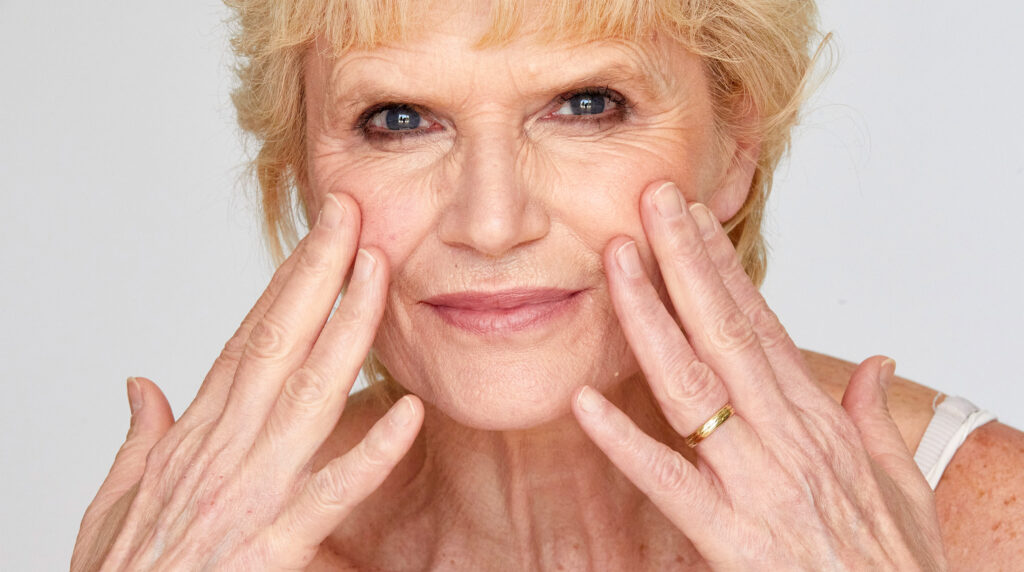
Close-up portrait of mature woman touching her skin, representing visible signs of skin aging

Reading time: ~8-9 min

Inflammaging describes chronic low-grade inflammation that silently accelerates collagen loss and biological skin aging long before wrinkles appear. Understanding how UV exposure, stress, metabolic health and hormonal changes influence this process allows for more strategic, preventive and regenerative dermatological care.

Picture of Dr. Cordula Ahnhudt-Franke

Dr. Cordula Ahnhudt-Franke

Dermatology & Preventive Laser Medicine

Dr. Cordula Ahnhudt-Franke has been working in dermatology for more than two decades. At mySkin Mallorca, she combines medical expertise with modern laser technology to help patients protect, repair, and strengthen their skin – not only for aesthetic improvement, but for long-term skin health and prevention.

About the Author

Protected: News (Test)

This content is password-protected. To view it, please enter the password below.

Sustainability at myskin Dermatology Mallorca

Sustainability at myskin Dermatology Mallorca

In our practice, we consistently prioritize sustainability to make a positive impact on the environment. Here are some of our initiatives:

Paperless practice:

All patient records, consent forms, and post-treatment instructions are digitally created, signed, and stored. Invoices are conveniently sent to our patients via email.

Elimination of printed flyers:

We opt for eco-friendly alternatives and refrain from printing flyers. Instead, patients can find all information about treatments and our services through our in-store media presentation, which runs in every room of the practice.

Ecological water dispenser:

Feel free to use your personal bottle or our water glasses at our ecological water dispenser.

Sustainable jute bags:

When purchasing our products, you receive our high-quality jute bag with our mySkinMallorca logo. This bag is reusable and versatile – perfect for shopping or as a beach bag.

Waste separation:

Waste separation is a standard practice for us. We only use single-use items for syringes and needles. Surgical materials are sterilized and reused.

Energy-efficient heating and cooling:

We regulate the temperature of our practice with common sense to maintain comfortable conditions. In both summer and winter, we ensure moderate, pleasant temperatures – not too hot and not too cold.

Sustainable provider selection:

When choosing our providers, we prioritize their sustainability. Hygiene and safety are paramount, so we reject excessive cosmetic packaging.

These measures demonstrate our commitment to sustainability and environmental protection in our practice.

Your mySkin Team

Sustainability at myskin Dermatology Mallorca

Nachhaltigkeit in unserer Praxis

In unserer Praxis setzen wir konsequent auf Nachhaltigkeit, um einen positiven Beitrag zur Umwelt zu leisten. Hier sind einige unserer Maßnahmen:

Papierlose Praxis:

Alle Patientenaufnahmen, Aufklärungsbögen und Anweisungen nach Behandlungen werden digital erstellt, unterschrieben und gespeichert. Rechnungen erhalten unsere Patienten bequem per E-Mail.

Verzicht auf gedruckte Flyer:

Wir setzen auf umweltfreundliche Alternativen und verzichten auf gedruckte Flyer. Stattdessen finden unsere Patienten alle Informationen zu Behandlungen und unserem Leistungsspektrum in unserer Instore Media Präsentation, die in jedem Raum der Praxis läuft.

Ökologischer Wasserspender:

Bedienen Sie sich gerne mit Ihrer persönlichen Flasche oder unseren Wassergläsern an unserem ökologischen Wasserspender.

Nachhaltige Jutetaschen:

Beim Kauf unserer Produkte erhalten Sie unsere hochwertige Jutetasche mit unserem mySkinMallorca Logo. Diese ist wiederverwendbar und vielseitig einsetzbar – perfekt als Einkaufs- oder Strandtasche.

Mülltrennung:

Mülltrennung ist für uns selbstverständlich. Wir verwenden Einmalartikel nur bei Spritzen und Kanülen. OP-Material wird sterilisiert und wiederverwendet.

Energieeffiziente Heizung und Kühlung:

Wir heizen und kühlen unsere Praxis mit gesundem Menschenverstand auf Wohlfühltemperaturen. Im Sommer wie im Winter sorgen wir für moderate, angenehme Temperaturen – nicht zu heiß und nicht zu kalt.

Nachhaltige Providerwahl:

Bei der Auswahl unserer Provider achten wir auf deren Nachhaltigkeit. Hygiene und Sicherheit stehen dabei an erster Stelle, daher lehnen wir üppige Kosmetikverpackungen ab.

Diese Maßnahmen zeigen unser Engagement für Nachhaltigkeit und Umweltschutz in unserer Praxis.

Ihr mySkin Team

Press

Dr. Cordula Ahnhudt in der Presse

Dr. Cordula Ahnhudt-Franke in the media

Dr. Cordula is an enthusiastic educator of doctors in the field of aesthetic dermatology and lasers. She is an advocate of high end combined treatments of injectables and laser/energy based devices with very natural results. She teaches nationally and internationally the use of lasers on different skin types and establishes new treatment protocols, e.g. for acne and skin rejuvenation. Her authentic and patient manner, coupled with her many years of experience and passion, make her a sought-after speaker at international conferences worldwide, as well as an instructor for individual hands-on injectable courses.

Dr. Cordula is a regular contributor to the press and media, commenting on treatments and industry developments, reviewing products and featuring in case studies and patient stories.

For more information about her media work or to discuss potential media or brand ambassador projects, please contact info@myskin-mallorca.com

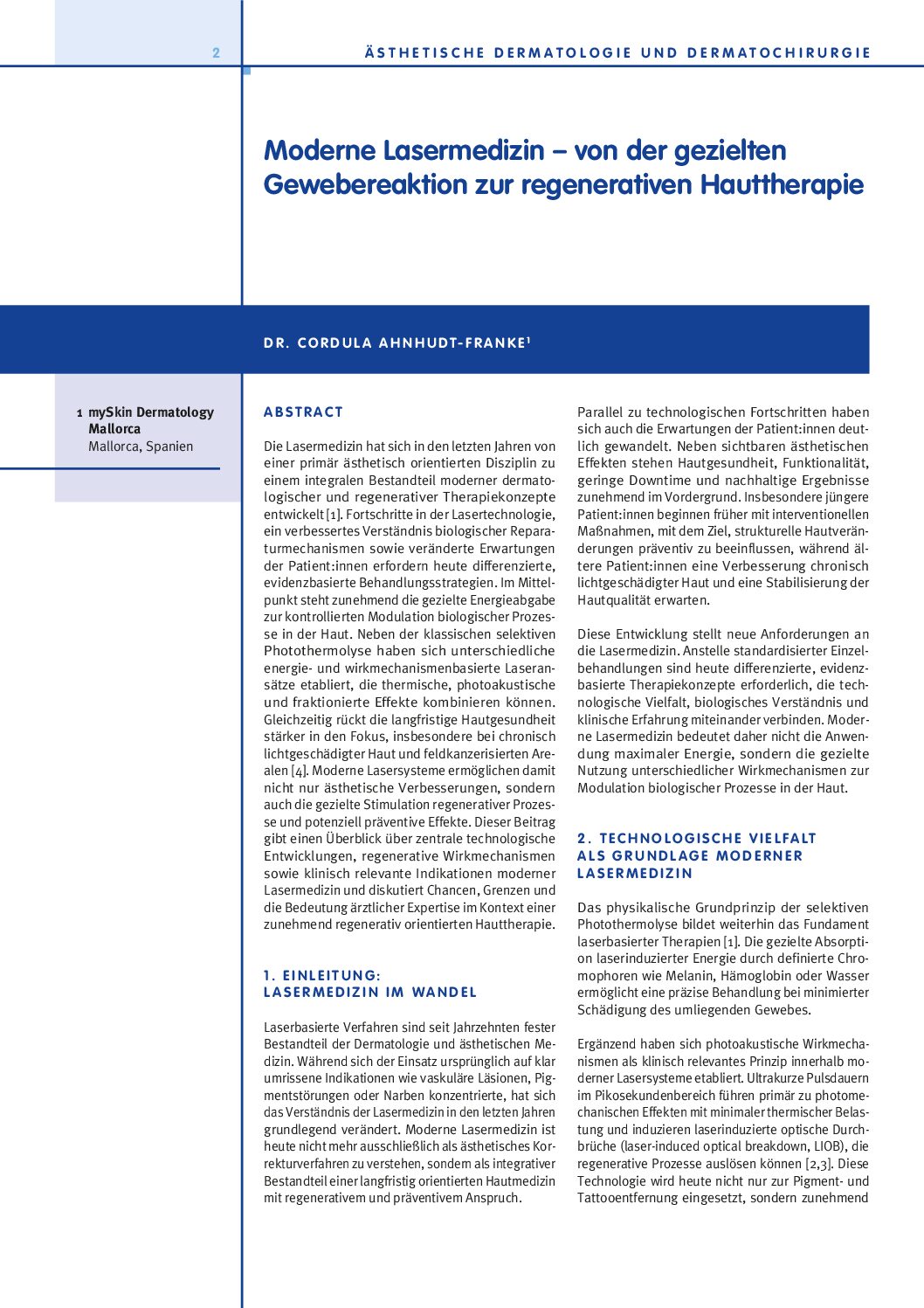
Moderne Lasermedizin: Von der gezielten Gewebereaktion zur regenerativen Hauttherapie
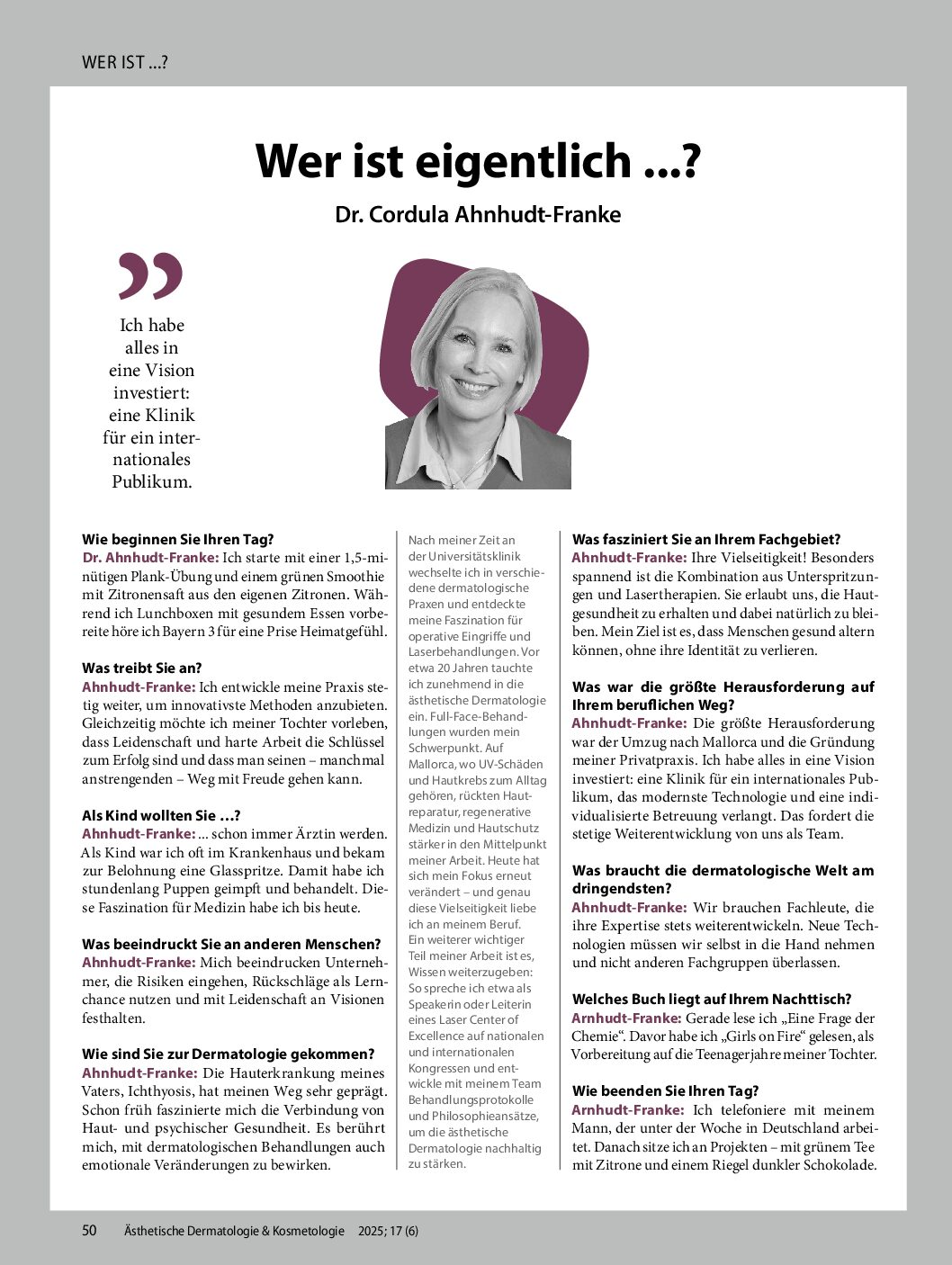
Interview / Portrait: “Wer ist eigentlich …Dr. Cordula Ahnhudt-Franke?“ – ästhetische dermatologie + kosmetologie
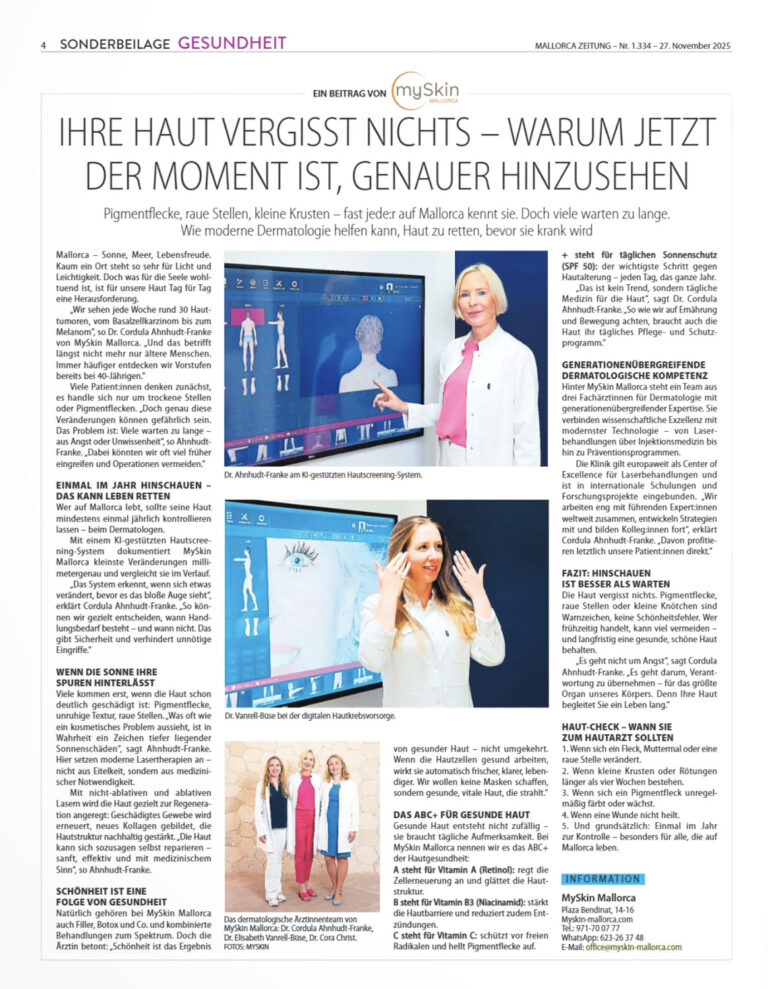
Mallorca Zeitung – Sonderbeilage Gesundheit: “Wenn sich die Haut verändert: Warum Hinsehen entscheidend ist”
Cover Presseartikel
1.940 nm: eine neue Wellenlänge für ein verbessertes Hautbild
Cover Presseartikel
Die moderne lasergestützte Aknetherapie in der Praxis
Cover Presseartikel
Diskurs Dermatologie 4 2023 – Moderne lasergestützte Aknetherapie
Cover Presseartikel
Diskurs Dermatologie 7 2023 – Management von Narben
Cover Presseartikel
Non-ablative laser treatment of surgical and acne-induced scars (web)
Cover Presseartikel
Non-ablative laser treatment of surgical and acne-induced scars (print)
Gesichtsmasken und Haut
Schütteres Haar oder Haarausfall
2019 Medical SkinCare – Haut-Feuchtigkeit
Laserbehandlungen
TM 2019 – Laserbehandlungen
Dermatologin im Ausland
MA 35-2019 Dermatologin im Ausland
MM 03-2019 Hautkrebs ist heilbar
Arten von Narben
KI 02-2018 Narbentypen
Hautprobleme
KI 02-2017 Hautprobleme
MK 10-2016 Hautanhangsgebilde
MK 08-2016 Krankheiten erkennen
MK 07-2016 Hautkrebs-Vorsorge
Hauttumore
MBF 05-2016 Hauttumore
MBF 04-2015 Aktinische Keratosen
Cellulite
MBF 01-2015 Cellulite