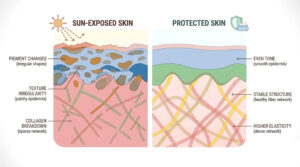
Pigment changes and sun damage are among the most visible signs of cumulative skin aging. They reflect long-term ultraviolet exposure as well as complex biological processes involving melanocytes, vascular structures and the skin’s connective tissue. While often perceived as isolated “age spots,” these changes are typically multifactorial and affect several layers of the skin simultaneously.
Ultraviolet radiation influences DNA integrity, collagen stability and pigment regulation. Over time, this leads to uneven pigmentation, vascular alterations, redness and reduced skin resilience. Individual skin type, hormonal factors, lifestyle and patterns of sun exposure determine how these changes develop and progress. In regions with high UV exposure such as Mallorca, pigment disorders and photodamage represent a central dermatological concern.
Modern dermatology therefore approaches pigmentation not as a purely cosmetic issue, but as a biological condition requiring precise evaluation. Different mechanisms such as increased melanin production, inflammation or vascular changes often coexist, which explains why isolated treatment frequently leads to unstable or incomplete results.
At mySkin Mallorca, pigment-related skin changes are addressed through a differentiated and biologically guided approach. Understanding the underlying mechanisms allows treatment strategies to be selected more precisely, while consistent photoprotection remains essential to prevent further structural damage. The goal is not short-term correction, but long-term stabilization of skin tone, structure and resilience.
Medical Review
This content is medically reviewed by Dr. Cordula Ahnhudt-Franke, board-certified dermatologist, and curated by the dermatology team at mySkin Mallorca. It reflects current scientific knowledge and clinical experience.
Medical Integrity Statement
All medical content published by mySkin Mallorca is developed according to the principles of evidence-based medicine. The information provided is independent of commercial interests, industry affiliations or product-driven influence and reflects current scientific knowledge and clinical expertise.
Healthy aging is not defined by the absence of aging, but by the preservation of biological function over time. In dermatology, it describes the ability of the skin to maintain structural stability, regenerative capacity and resilience despite ongoing intrinsic and extrinsic stressors. Skin aging is therefore not only an aesthetic phenomenon, but a biological process shaped by inflammation, metabolic balance, lifestyle and cellular repair mechanisms.
Chronic low-grade inflammation, persistent stress and metabolic imbalance are among the most important drivers of biological aging. These processes affect collagen integrity, barrier function, microcirculation and cellular communication long before visible changes appear. Increasingly, dermatology recognizes that long-term skin health cannot be separated from systemic health and lifestyle factors.
This perspective shifts the focus away from isolated anti-aging interventions toward strategies that support biological stability over time. Sleep quality, stress regulation, nutrition and physical activity directly influence inflammatory pathways, oxidative stress and regenerative signaling in the skin. Together, these factors determine how efficiently the skin can repair, protect and maintain itself.
At mySkin Mallorca, healthy aging is approached as a central concept connecting dermatology, regenerative medicine and lifestyle-oriented care. The goal is not short-term correction, but the long-term preservation of skin quality, comfort and function. By addressing inflammation, metabolic balance and regenerative capacity, skin aging can be guided in a biologically coherent and sustainable way.
Medical Review
This content is medically reviewed by Dr. Cordula Ahnhudt-Franke, board-certified dermatologist, and curated by the dermatology team at mySkin Mallorca. It reflects current scientific knowledge and clinical experience.
Medical Integrity Statement
All medical content published by mySkin Mallorca is developed according to the principles of evidence-based medicine. The information provided is independent of commercial interests, industry affiliations or product-driven influence and reflects current scientific knowledge and clinical expertise.
The skin is a hormonally responsive organ. Fluctuations in female hormone levels directly influence skin structure, elasticity, hydration, pigmentation and regenerative capacity. Many of the changes women experience throughout life cannot be explained by external factors or skincare routines alone, but are closely linked to hormonal regulation and biological life stages.
Hormonal influences begin early, long before visible signs of aging appear. Cyclical variations, pregnancy, postpartum changes and later transitions such as perimenopause and menopause continuously affect vascularization, sebaceous activity, collagen synthesis, barrier integrity and inflammatory balance. These processes often develop gradually and may precede visible skin aging by several years.
This understanding has shifted modern dermatology toward a more integrated perspective. Rather than viewing skin changes as isolated aesthetic concerns, they are increasingly recognized as part of a broader biological context shaped by endocrine signaling, metabolic regulation and cellular responsiveness. Skin health therefore cannot be fully understood without considering hormonal balance.
At mySkin Mallorca, female skin health is approached as a dynamic and evolving process. Dermatological expertise is combined with regenerative medicine and an interdisciplinary understanding of female biology. The aim is not short-term correction, but long-term stability of skin structure, resilience and regenerative capacity. By integrating hormonal influences into dermatological care, treatment strategies can be tailored more precisely to each life stage.
Medical Review
This content is medically reviewed by Dr. Cordula Ahnhudt-Franke, board-certified dermatologist, and curated by the dermatology team at mySkin Mallorca. It reflects current scientific knowledge and clinical experience.
Medical Integrity Statement
All medical content published by mySkin Mallorca is developed according to the principles of evidence-based medicine. The information provided is independent of commercial interests, industry affiliations or product-driven influence and reflects current scientific knowledge and clinical expertise.
Skin aging is not determined by genetics alone. While DNA provides the biological foundation, epigenetic regulation defines how genes are expressed over time. These mechanisms influence collagen integrity, cellular repair capacity, pigmentation control and inflammatory balance, and explain why skin of the same chronological age can appear structurally very different.
Epigenetics is a central concept in modern dermatology and skin longevity medicine. It describes how environmental influences, lifestyle factors and internal biological signals continuously shape skin aging. Ultraviolet radiation, chronic inflammation, stress, sleep quality, nutrition and hormonal changes all directly affect these regulatory pathways and contribute to cumulative changes in skin structure and function.
This understanding has shifted the focus of dermatology from visible signs of aging to underlying biological processes. Biological skin age reflects how efficiently cells regenerate, how stable collagen structures are and how well protective mechanisms function, rather than the number of years lived. Preventive strategies that combine photoprotection, stress regulation and regenerative stimulation can therefore influence the trajectory of skin aging.
At mySkin Mallorca, epigenetic principles are integrated into regenerative dermatology, laser medicine and female health concepts. Controlled medical interventions such as fractional and picosecond laser technologies, together with regenerative injectable treatments, are used to activate intrinsic repair pathways and support extracellular matrix stability. The goal is not short-term aesthetic correction, but long-term improvement of skin resilience, function and biological longevity.
Medical Review
This content is medically reviewed by Dr. Cordula Ahnhudt-Franke, board-certified dermatologist, and curated by the dermatology team at mySkin Mallorca. It reflects current scientific knowledge and clinical experience.
Medical Integrity Statement
All medical content published by mySkin Mallorca is developed according to the principles of evidence-based medicine. The information provided is independent of commercial interests, industry affiliations or product-driven influence and reflects current scientific knowledge and clinical expertise.
Skin aging is not defined by time alone. While chronological age provides a numerical reference, the true condition of the skin is determined by biological processes that govern structure, regeneration and resilience. Collagen degradation, reduced fibroblast activity, chronic low-grade inflammation and cumulative environmental exposure progressively alter skin quality, elasticity and mechanical stability.
In modern dermatology, the focus has shifted from treating isolated visible signs of aging toward understanding its biological foundations. The concept of skin longevity prioritizes the long-term preservation of skin function rather than short-term aesthetic correction. Central to this approach is collagen, the primary structural protein of the dermis, which provides strength, elasticity and support for the extracellular matrix.
With increasing age, collagen synthesis declines while enzymatic degradation accelerates. This imbalance leads to dermal thinning, loss of elasticity and reduced resistance to mechanical and environmental stress. These intrinsic processes are further amplified by external factors such as ultraviolet radiation, chronic inflammation and hormonal changes.
Importantly, skin aging is not entirely irreversible. The skin retains a significant capacity for regeneration when appropriate biological stimuli are applied. Fibroblast activity can be reactivated, collagen production stimulated and matrix organization improved. Modern regenerative dermatology is based on these mechanisms and aims to support intrinsic repair pathways.
At mySkin Mallorca, skin longevity is approached through evidence-based regenerative dermatology. Advanced laser technologies, regenerative injectable therapies and combination treatment concepts are used to influence biological aging at a structural level. The goal is not rapid aesthetic change, but sustained improvement of skin stability, function and resilience.
Medical Review
This content is medically reviewed by Dr. Cordula Ahnhudt-Franke, board-certified dermatologist, and curated by the dermatology team at mySkin Mallorca. It reflects current scientific knowledge and clinical experience.
Medical Integrity Statement
All medical content published by mySkin Mallorca is developed according to the principles of evidence-based medicine. The information provided is independent of commercial interests, industry affiliations or product-driven influence and reflects current scientific knowledge and clinical expertise.
In our Knowledge Hub, we share medical insights, clinical experience and evidence-based perspectives on skin health, aging and modern dermatology. This space is designed to provide clear orientation and a deeper understanding of complex topics – beyond trends and short-term aesthetics, with a focus on long-term skin health and biological integrity.
Why early skin care, prevention and restraint shape long-term skin health
Medical Integrity Statement
All medical content published by mySkin Mallorca is developed according to the principles of evidence-based medicine. The information provided is independent of commercial interests, industry affiliations or product-driven influence and reflects current scientific knowledge and clinical expertise.
Why skin never ages overnight – and what really accelerates visible change
In my consultation room I often hear the same sentence: “My skin has suddenly aged.” “These spots appeared almost overnight.” And I understand that feeling. Sometimes the change does seem abrupt. The skin looks duller, less elastic, more uneven. Fine lines feel deeper. The glow is gone.
But medically speaking, skin aging is never sudden. What feels abrupt is usually the visible tipping point of cumulative biological stress.
For many years the skin compensates. It repairs ultraviolet damage. It balances inflammation. It stabilizes pigment production. It rebuilds collagen. It maintains its barrier. It is remarkably resilient. But it keeps a record.
The skin remembers everything.
The skin as a mirror of internal health
The skin is the largest organ of the human body and our interface with the outside world. At the same time, it reflects what is happening internally. Texture, tone, elasticity and clarity are not purely cosmetic features. They are biological indicators.
When the body is under strain — through chronic stress, inflammation, hormonal imbalance, poor nutrition or lack of sleep — the skin often shows it first. Not dramatically at first. But gradually. Healing slows. Pigmentation becomes more irregular. Sensitivity increases. The surface appears less even.
Skin health and overall health are inseparable.
Ultraviolet radiation: the most powerful driver of premature skin aging
If we want to understand premature skin aging, we must talk about ultraviolet radiation.
When I perform full-body skin cancer screenings, something becomes very clear. Within the same person, there can be a visible age difference of 15 or even 20 years between different areas of the body. The face, neck, décolleté and forearms — areas exposed to sun for decades — often show fine lines, pigment spots, rough texture and visible vessels. Then you look at the abdomen or buttocks, which have had minimal UV exposure, and the skin there is frequently smoother, firmer and more even.
I sometimes tell my patients, with a smile, “If you want to see what the sun has done to your skin, compare your face to your buttocks.”
It may sound humorous, but it is biologically accurate. UV radiation damages DNA, accelerates collagen breakdown, stimulates melanocytes, alters vascular structures and weakens immune surveillance. Photoaging is not just about wrinkles. It is about structural and surface change. And it is cumulative.
Daily photoprotection remains the most powerful strategy we have. An evidence-based approach such as the ABC+ of skin cancer prevention is not about fear — it is about consistency.
Hormones: the underestimated structural regulators
Hormonal balance plays a far greater role in skin aging than many people realize.
Estrogen supports collagen stability, dermal thickness, hydration and barrier resilience. When estrogen levels decline, particularly during perimenopause and menopause, the skin can change relatively quickly. It may become thinner, drier and less elastic. Fine lines become more visible and wound healing slows. Many women describe this as sudden aging, but biologically it reflects a shift in structural support.
Hormonal influence is not limited to menopause. Androgens regulate sebaceous activity and influence acne. Thyroid hormones affect hydration, texture and hair density. Chronic stress increases cortisol, which disrupts immune balance and promotes inflammation.
In clinical practice we also observe that when hormonal imbalances are medically optimized — whether through carefully supervised hormone replacement therapy or properly adjusted thyroid medication — skin stability, hydration and resilience often improve. The skin is highly sensitive to endocrine balance. When hormones are out of range, the skin frequently shows it. When they are well regulated, the skin benefits. In some cases, supportive regenerative strategies such as regenerative aesthetic treatments can complement systemic balance by stimulating collagen support and structural stability.
Nutrition and inflammation: feeding the skin from within
Lifestyle is not an abstract concept. It is biological input.
A balanced diet rich in fiber, vegetables, fruits, healthy fats and adequate protein supports stable blood sugar levels, reduces systemic inflammation and supports collagen metabolism.
High sugar intake and highly processed foods promote glycation, which stiffens collagen fibers, and increase inflammatory signaling. Patients with acne often notice immediately how sugar and fast food aggravate breakouts.
Acne is an inflammatory dermatosis, and metabolic stress fuels inflammation.
But this relationship extends beyond acne. Rosacea, dermatitis and general skin reactivity can worsen when inflammation and metabolic imbalance are present. Even without obvious deficiency, long-term subtle imbalance becomes visible over time.
Healthy nutrition is not about restriction. It is about stability. The skin thrives when inflammation is low and glucose levels are steady.
Smoking and oxygenation
Smoking remains one of the strongest accelerators of premature skin aging.
Nicotine constricts blood vessels and reduces oxygen delivery to the skin. Oxygen is essential for collagen production, wound healing and cellular repair. Chronic reduction in oxygenation leads to dullness, deeper lines around the mouth and slower regeneration.
Even without dramatic wrinkles, smoking skin often appears less vibrant and prematurely aged. The mechanism is simple: skin is living tissue and requires adequate oxygen supply to maintain structure.
Stress, sleep and regenerative capacity
The skin and nervous system are closely connected. Chronic stress increases inflammatory mediators and disrupts barrier stability. Many patients experience acne flares, worsening rosacea or eczema exacerbations during stressful periods.
Sleep is equally important. During deep sleep, DNA repair, barrier restoration and collagen remodeling occur. Chronic sleep deprivation reduces this regenerative capacity. Over time, the skin appears less resilient and slower to recover.
Lifestyle pressure does not remain invisible. It becomes biologically embedded.
Skincare as daily structural maintenance
Skincare cannot compensate for chronic systemic imbalance, but it supports resilience.
Caring for the skin is not seasonal. It is a daily discipline — similar to brushing your teeth. Gentle cleansing, appropriate hydration and consistent LINK sun protection maintain barrier integrity and reduce inflammatory stress.
Proper hydration is not only about drinking water, but about maintaining an intact epidermal barrier. When the barrier is stable, the skin tolerates environmental stress more effectively. When it is repeatedly disrupted, inflammation escalates more easily.
Aging is cumulative — but not inevitable
Genetics influence skin quality. We are born with a certain collagen structure, a specific skin type and a particular level of sensitivity or pigmentation. Fair skin reacts differently to UV exposure than darker skin. Some individuals are more prone to inflammation or pigmentation changes than others.
But genetics are the foundation — not the final outcome.
What determines how prematurely skin ages is how genetic predisposition interacts with lifestyle. Chronic UV exposure accelerates collagen loss. Persistent inflammation weakens barrier integrity. Hormonal imbalance alters structural stability. Metabolic instability promotes glycation.
These processes are biological — but they are modifiable.
Even individuals with sensitive or fair skin can significantly influence their skin aging trajectory through consistent habits. Daily sun protection, balanced nutrition, stress regulation, restorative sleep, smoking cessation, appropriate hormonal care and thoughtful skincare all support skin longevity.
Premature skin aging is rarely caused by one dramatic event. It is the cumulative effect of small, repeated influences. And accumulation works in both directions. Just as long-term stress accelerates visible aging, long-term healthy habits strengthen resilience.
You cannot change your genetics. But you can influence how strongly they are expressed.
Skin longevity is not about perfection. It is about reducing avoidable acceleration and supporting the skin’s natural repair capacity.
Your skin reflects how you live — and fortunately, it responds when you change.
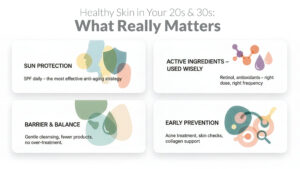
Your 20s and 30s are often considered the “best years” for skin. Breakouts may settle, the skin still appears firm, and visible aging feels far away. From a dermatological perspective, however, this phase is not neutral – it is foundational.
In my daily practice, I see again and again that the foundations for long-term skin health are laid early – often quietly, without immediate visible consequences. Collagen decline begins gradually in the mid-20s. Ultraviolet damage accumulates long before it becomes visible. Low-grade inflammation leaves structural traces even when the skin appears calm. What we see at 45 is often the delayed result of decisions made at 25.
Premature skin aging is rarely purely genetic. In most cases, it reflects cumulative habits, skincare decisions and missed preventive opportunities. Understanding these biological patterns allows for a calmer, more realistic and evidence-based approach to skin care in young adulthood.
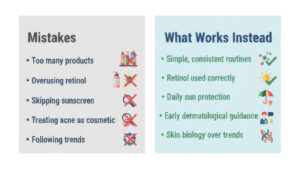
Mistake 1:
Over-Treating the skin instead of supporting It
Highly complex routines, daily exfoliation and constant product changes are often perceived as sophisticated skincare. Influenced by social media trends and multi-step routines, many young patients believe they are doing their skin a favor. Clinically, however, excessive skincare is one of the most common causes of barrier disruption, chronic irritation and inflammatory skin reactions such as perioral dermatitis.
I see this particularly often in patients who are highly motivated but poorly guided. When the skin barrier is repeatedly compromised, the skin shifts into a low-grade inflammatory state. Over time, this weakens resilience and increases sensitivity. The skin in your 20s and early 30s has a strong intrinsic regenerative capacity. It does not require constant stimulation.
What matters instead:
A reduced, well-chosen routine adapted to skin type, climate and lifestyle. In dermatology, controlled support is more effective than continuous intervention.
Mistake 2:
Using Retinol too early, too strong, too often
Retinoids are among the most effective and scientifically supported ingredients in dermatology. Used correctly, they improve cell turnover, support collagen metabolism and help regulate pigmentation. Problems arise almost exclusively from incorrect use: starting with concentrations that are too high, applying retinol too frequently, or combining it with multiple exfoliating actives at the same time.
In clinical reality, I rarely see true “retinol intolerance” – but very often retinol misuse. Retinol itself is not inherently dangerous. When used in the evening, introduced gradually and combined with consistent daily sun protection, it is usually well tolerated. The issue is not the molecule – it is the misconception that stronger and more frequent use automatically leads to better results.
What matters instead:
Choose the right formulation, adjust frequency rather than strength, and always combine retinol with daily sunscreen. Precision is more important than intensity.
Mistake 3:
Chasing trends instead of understanding skin biology
Skincare trends change rapidly, but skin biology does not. What works beautifully for one person may worsen acne, rosacea, pigmentation or sensitivity in another. Skin is a hormonally responsive, metabolically active organ. Stress, UV exposure, sleep quality and lifestyle influence how it behaves.
Treating skin as a trend-driven surface rather than a living biological system is one of the most common reasons patients come to my clinic frustrated and confused.
What matters instead:
Understanding your individual skin biology and adapting care accordingly – ideally with professional dermatological guidance rather than trial-and-error routines.
Mistake 4:
Underestimating Sun Protection – because damage feels invisible
In youth, tanning is often associated with health and attractiveness. Few people think about wrinkles, pigment spots or skin cancer at this stage. Medically, ultraviolet radiation is the most powerful external driver of collagen degradation and DNA damage.
The most severe and irreversible structural changes often occur early in life – during childhood, adolescence and young adulthood. This is something many of my patients only realize years later, when pigment changes or premature aging suddenly appear.
What matters instead:
Daily, consistent photoprotection is the most effective anti-aging and skin cancer prevention strategy we have. Not occasionally. Not only on vacation. Every day.
Mistake 5:
Treating Acne as a Cosmetic Issue Instead of a Medical Condition
Acne is a chronic inflammatory skin disease – not a cosmetic inconvenience. Persistent inflammation alters dermal architecture. Without early and appropriate treatment, acne can lead to scarring, post-inflammatory pigmentation and long-term barrier compromise.
In practice, I often see that patients wait too long, hoping acne will resolve on its own. Unfortunately, this increases the risk of permanent structural changes.
What matters instead:
Early dermatological evaluation and structured therapy prevent long-term damage and reduce the need for more invasive correction later.
Prevention does not mean over-treatment
From a biological perspective, collagen breakdown begins around the mid-20s. This does not justify aggressive treatment. It explains why early, carefully dosed preventive strategies can be meaningful.
In selected cases, low-dose collagen-inducing treatments or neuromodulators can help preserve skin structure. There is no fixed minimum age. In patients with strong facial muscle activity, early conservative treatment may prevent dynamic wrinkles from becoming permanently etched into the skin. Preventive dermatology is not about doing more – it is about intervening at the right time, with the right intensity.
Balance matters: not too much, not too little
Some patients overuse products and actives, while others neglect basic skincare entirely – including many young men, who often underestimate sun protection and cleansing. Healthy skincare is about balance. Over many years of practice, I have learned that a few consistent, well-adapted steps are far more effective than either extreme.
Daily habits that truly make a difference
One of the most underestimated steps is proper evening cleansing. Throughout the day, the skin accumulates sunscreen residues, pollutants and inflammatory particles. Barrier repair occurs at night. Going to bed without cleansing interferes with this regenerative phase.
What matters instead:
Gentle evening cleansing with a suitable cleanser – not soap, not aggressive detergents – supports regeneration and prepares the skin for overnight repair.
Skin Checks are part of prevention – even at a young age
Preventive dermatology also includes regular skin checks, especially for individuals with many moles or newly appearing lesions. Skin cancer, including melanoma, does not only affect older patients. I have seen advanced cases in very young adults. Early detection significantly improves prognosis.
A Smarter approach to skin in your 20s and 30s
Healthy skin aging is not about doing everything. It is about protecting the skin early, caring for it consistently and making decisions that respect its biology. Previous generations lacked today’s knowledge about UV damage and prevention. Today’s young adults have the advantage of understanding these mechanisms earlier. The goal is not perfection – it is long-term skin health, structural stability and intelligent prevention.
Pigmentation changes are among the most common skin concerns seen in dermatological practice. After periods of increased UV exposure, many patients notice dark spots, uneven skin tone or persistent redness becoming more visible. At the same time, questions often arise about which laser treatments are safe, effective and biologically meaningful at different times of the year.
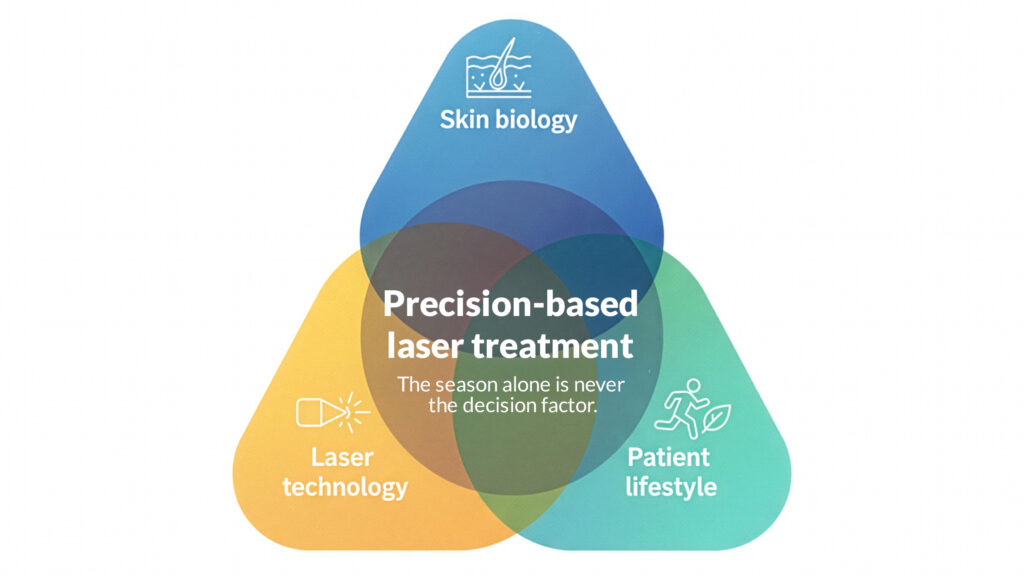
In regions with high sun exposure such as Mallorca, treatment decisions cannot be based on the calendar alone. Laser therapy is not defined by seasons, but by skin biology, laser technology and individual lifestyle factors. Successful pigmentation treatment therefore requires a differentiated, individualized approach rather than general rules.
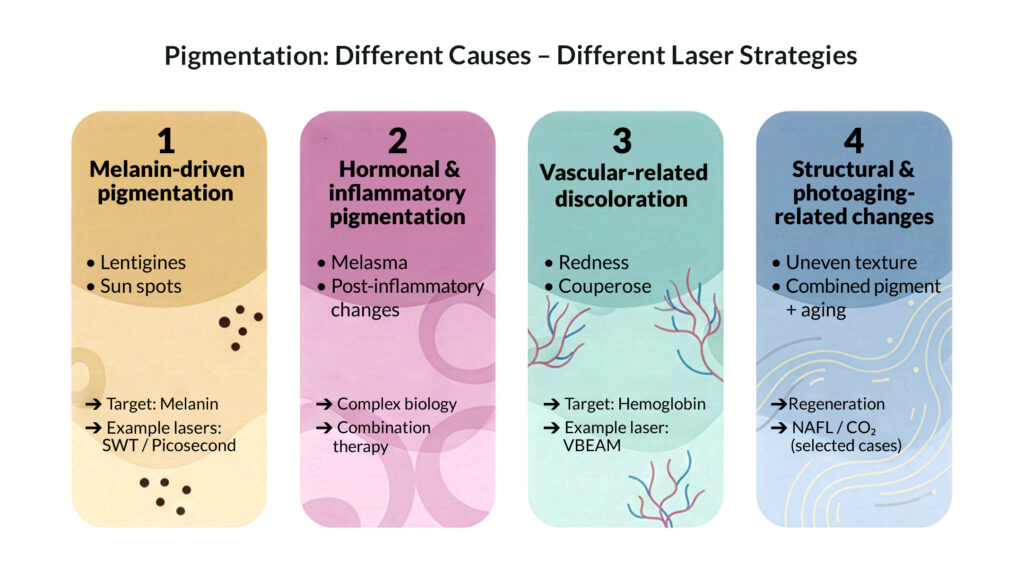
Pigmentation is not a single condition. It represents a spectrum of changes involving melanin distribution, vascular components and inflammatory processes. Understanding these mechanisms is essential for selecting the appropriate laser technology and achieving safe, long-term results.
Patients with significant UV exposure or pigment changes should also undergo regular dermatological skin checks to exclude medically relevant lesions.
Understanding pigmentation: more than just dark spots
Pigment changes arise from different biological pathways. Sun-induced pigmentation such as lentigines is driven primarily by increased melanin production. Conditions like melasma involve complex hormonal and inflammatory components. Redness, couperose or post-inflammatory pigmentation often have a strong vascular contribution.
Because these mechanisms differ, no single laser technology is suitable for all types of pigmentation. Effective treatment requires precise selection of wavelength, energy delivery and treatment depth – based on diagnosis, skin type and current pigmentation status.
Laser safety and efficacy cannot be defined by the calendar alone. Whether a laser treatment is appropriate in spring depends on several key factors:
the treatment goal
the laser technology used
the patient’s skin type
the degree of tanning or recent sun exposure
individual lifestyle and outdoor activity
Patients with lighter skin types, minimal tanning, consistent photoprotection and limited outdoor exposure may safely undergo even more intensive laser procedures well into spring, including ablative treatments, when medically indicated and closely supervised.
In contrast, patients with darker skin types, a tendency toward hyperpigmentation or extensive outdoor activity require significantly more caution. In these cases, lasers that directly target melanin demand careful risk assessment and adapted treatment strategies.
Selective light and vascular lasers: when precision matters
Selective wavelength light systems and vascular lasers target melanin or hemoglobin with controlled energy delivery. Their strength lies in improving diffuse pigmentation, redness and overall skin clarity while minimizing damage to surrounding tissue.
At mySkin Mallorca, selective wavelength technology such as Nordlys SWT is used for superficial pigment changes and skin tone irregularities.
For vascular components, including redness, couperose and inflammatory erythema, VBEAM pulsed dye laser technology allows precise targeting of hemoglobin rather than melanin.
In spring, these treatments can be effective for superficial pigmentation and vascular changes when combined with strict photoprotection. They are often used to improve skin tone rather than to induce deep structural remodeling.
Non-ablative fractional lasers for pigment and texture
Non-ablative fractional lasers, such as 1550 nm or 1940 nm wavelengths, stimulate controlled regeneration by creating microscopic thermal zones within the skin. This accelerates epidermal turnover and induces dermal remodeling.
These lasers are particularly useful when pigmentation is combined with early textural changes or signs of skin aging. In spring, treatments can be safely performed with appropriate settings and rigorous sun protection.
Picosecond lasers: targeting pigment without heat damage
Picosecond laser technology works through ultra-short pulses that generate photoacoustic effects rather than thermal injury. Pigment particles are fragmented efficiently while surrounding tissue remains largely unaffected.
Picosecond lasers are well suited for resistant pigmentation, post-inflammatory discoloration and mixed pigment conditions. In selected cases, they can be used even during periods of higher UV exposure, provided patient compliance with sun protection is excellent. At mySkin Mallorca, this approach is represented by PicoWay picosecond laser technology.
CO₂ ultrapulse laser: a powerful tool – with clear limitations
Ablative CO₂ lasers remain among the most effective technologies for pigment correction and structural skin regeneration. By removing micro-columns of tissue, they trigger profound epidermal and dermal remodeling.
However, CO₂ laser treatments increase photosensitivity and require a longer recovery phase. While they can be performed in spring in carefully selected patients, they are never routine seasonal treatments. Strict sun avoidance, excellent photoprotection and realistic downtime expectations are essential.
CO₂ laser therapy is reserved for specific indications where deeper resurfacing and long-term structural improvement are required and is performed using CO₂ Ultrapulse technology.
Photoprotection is non-negotiable
Regardless of skin type or laser modality, consistent photoprotection is mandatory for all patients undergoing laser treatment. Sun protection is not only essential to prevent pigmentation recurrence, but also to protect collagen integrity.
Ultraviolet radiation is one of the most powerful drivers of collagen degradation and biological skin aging. Without adequate sun protection, the regenerative benefits of laser treatments cannot be maintained.
In clinical practice, patients who are unwilling or unable to adhere to strict photoprotection protocols are not suitable candidates for laser therapy. This is a matter of medical responsibility and patient safety.
Conclusion: precision over general rules
Pigmentation treatment in spring requires precision, not simplification. In sun-intense regions such as Mallorca, successful laser therapy depends on individual skin biology, laser technology and patient behavior rather than on the season alone.
When treatments are selected based on skin type, pigmentation mechanism and lifestyle factors, laser treatments can be both safe and highly effective during spring. Performed under dermatological supervision and embedded in a comprehensive skin health strategy, they improve pigmentation, skin clarity and long-term skin quality without unnecessary risk.
A medical, science-based perspective on early skin aging and collagen degeneration.
Many people begin to notice subtle changes in their skin in their early 30s: fine lines, reduced firmness, less elasticity and a gradual loss of glow. These changes are not random. They reflect a well-documented biological process:
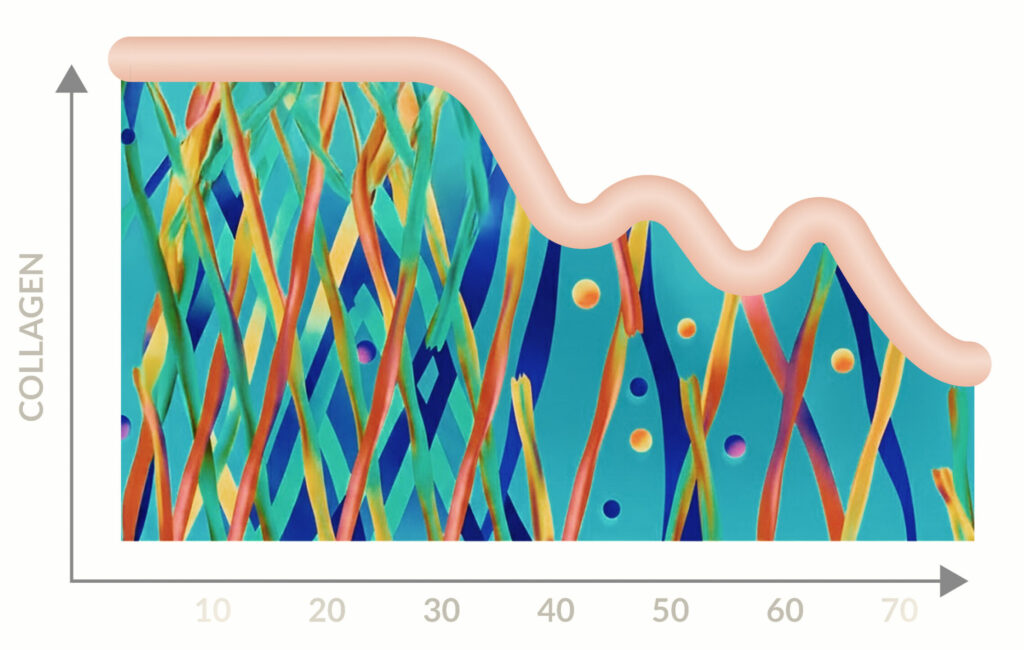
From around the age of 30, the skin loses approximately 1% of its collagen each year.
Collagen is the primary structural protein of the skin. It provides strength, elasticity and mechanical stability. As collagen levels decline, skin becomes thinner, less resilient and increasingly vulnerable to environmental damage.
While collagen loss is a natural part of aging, its speed and severity are strongly influenced by external and modifiable factors. Understanding these mechanisms is the foundation of effective prevention and long-term skin health.
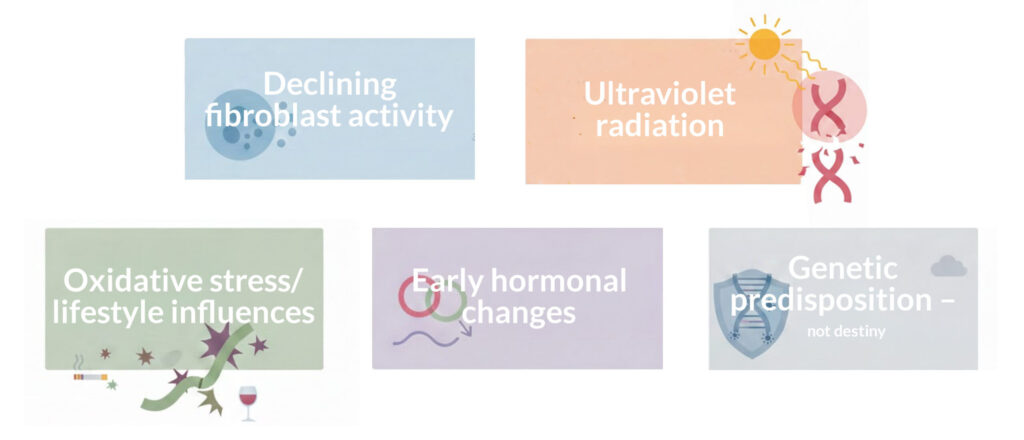
Why Does Skin Lose Collagen After 30?
Multiple factors accelerate the natural breakdown of collagen in the skin.
1. Declining fibroblast activity
Fibroblasts are the cells responsible for producing collagen and other structural components of the dermis. From the early 30s onward, their metabolic activity gradually decreases. Skin renewal slows and repair processes become less efficient.
2. Ultraviolet radiation as the main driver of collagen degeneration
Chronic UV exposure remains the most important external cause of premature collagen loss.
Ultraviolet radiation:
activates enzymes that break down collagen fibres
suppresses new collagen synthesis
increases inflammation and oxidative stress
This explains why daily photoprotection is the most effective anti-aging intervention documented in dermatology.
3. Oxidative stress and lifestyle influences
Free radicals generated by pollution, psychological stress, lack of sleep, smoking and alcohol directly damage collagen structures and impair fibroblast function. Oxidative stress accelerates biological skin aging far more than many people realise.
4. Early hormonal changes
Even before menopause, subtle hormonal shifts begin in the 30s. Estrogen and growth factors play a critical role in maintaining collagen density and skin thickness. As their influence gradually declines, structural changes become more apparent.
5. Genetic predisposition – not destiny
Genetics influence baseline collagen quality and repair capacity. However, research consistently shows that the majority of visible skin aging is driven by environmental and lifestyle factors, not genetics alone.
How to Slow Collagen Loss and Support Regeneration
Aging itself cannot be stopped. However, evidence-based strategies can significantly influence how quickly collagen declines and how well the skin maintains its structure.
1. Daily photoprotection as the foundation
Consistent use of broad-spectrum SPF 50 protects collagen from UV-induced degradation and is the cornerstone of every meaningful skin health strategy.
2. Skincare ingredients with proven biological relevance
Retinoids (Retinol, Retinal, Tretinoin)
Retinoids are the most extensively studied topical agents for collagen stimulation. They activate fibroblasts, increase collagen synthesis and improve dermal thickness over time.
Vitamin C (ascorbic acid)
Vitamin C is essential for collagen formation and functions as a powerful antioxidant. It stabilizes collagen fibres and reduces oxidative damage.
Niacinamide (vitamin B3)
Improves barrier function, reduces inflammation and supports dermal integrity. Topical skincare supports collagen health, but cannot replace medical stimulation.
3. Lifestyle factors that meaningfully affect collagen
restorative sleep
antioxidant-rich nutrition
regular physical activity
stress reduction
avoidance of smoking
moderation of alcohol
These measures reduce oxidative stress and support long-term skin resilience.
4. Energy-based treatments for true collagen stimulation
Energy-based devices play a central role in modern collagen induction by delivering controlled physical signals to the dermis that activate fibroblasts and initiate remodelling processes. Different wavelengths target different skin depths and biological mechanisms.
Picosecond laser technology (1064 nm)
Picosecond lasers operating at 1064 nm stimulate collagen primarily through photoacoustic effects rather than thermal injury. Ultra-short pulses create mechanical stress signals in the dermis that activate fibroblasts while leaving the epidermis largely intact.
This approach is particularly suitable for:
early collagen decline
prevention-focused strategies in the 30s
patients seeking stimulation without significant downtime
Non-ablative fractional laser (1550 nm)
The 1550 nm fractional wavelength delivers controlled thermal energy into the dermis while preserving the epidermis. It is well established for inducing deep dermal collagen remodeling. Clinical effects include improved skin density, firmness and long-term structural strengthening, making it a cornerstone of regenerative strategies when collagen loss becomes clinically visible.
IPL and collagen – a supportive effect
Intense Pulsed Light primarily targets pigment and vascular changes. While its collagen-stimulating effect is modest, repeated treatments may contribute indirectly to dermal health by reducing inflammation and improving overall skin quality.
CO₂ laser technology – advanced collagen remodelling in selected cases
CO₂ lasers represent the most intensive form of laser-based collagen remodeling. By creating controlled micro-ablative zones, they trigger a strong wound-healing response and deep structural regeneration. With modern pulse-controlled systems, treatment intensity can range from light resurfacing to deeper fractional protocols.
In patients in their 30s, CO₂ laser resurfacing is not a first-line preventive treatment, but may be appropriate in selected cases such as early structural damage or scarring that does not respond to non-ablative approaches.
5. Injectable treatments that truly induce collagen
Certain injectable therapies act directly on fibroblast activity and collagen synthesis.
Polylactic acid (PLA)
Induces controlled inflammatory responses that lead to gradual, sustained collagen production.
Calcium hydroxylapatite (CaHA)
Provides immediate structural support while stimulating long-term collagen formation when used in diluted protocols.
Polynucleotides
Support cellular repair mechanisms and enhance dermal quality on a regenerative level.
What Results Are Realistic in Your 30s?
A structured, prevention-oriented approach can:
slow collagen degeneration
stimulate new collagen formation
improve firmness and elasticity
refine texture
strengthen the skin barrier
reduce future photodamage
The 30s represent a critical window for long-term skin health.
Conclusion
Collagen loss after the age of 30 is inevitable, but its progression is highly modifiable. With consistent photoprotection, evidence-based skincare, healthy lifestyle choices and appropriately selected medical treatments, skin structure and resilience can be preserved well into later decades. Understanding the biology of aging skin is the first step. Individual assessment and medically guided strategies form the foundation for maintaining skin health, structure and resilience over time.
You are currently viewing a placeholder content from Vimeo. To access the actual content, click the button below. Please note that doing so will share data with third-party providers.
You are currently viewing a placeholder content from TrustIndex. To access the actual content, click the button below. Please note that doing so will share data with third-party providers.