Many patients notice that their skin suddenly looks thinner, less firm or more tired — even when they use good skincare, protect themselves from the sun and generally take care of themselves. Often, they feel that the skin has “aged overnight.” In clinical practice, however, these changes rarely happen suddenly.
In many cases, the process has been developing silently for years.

Modern dermatology increasingly recognizes that skin aging is not driven by time alone. One of the most important biological processes behind accelerated skin aging and collagen loss is chronic low-grade inflammation — a phenomenon now widely known as inflammaging.
While the term may sound new to many patients, the concept behind it is highly relevant. Inflammaging affects collagen stability, cellular repair, pigmentation, vascular health and long-term skin resilience. It is one of the key reasons why some individuals biologically age faster than others, even at the same chronological age.
What Is Inflammaging?
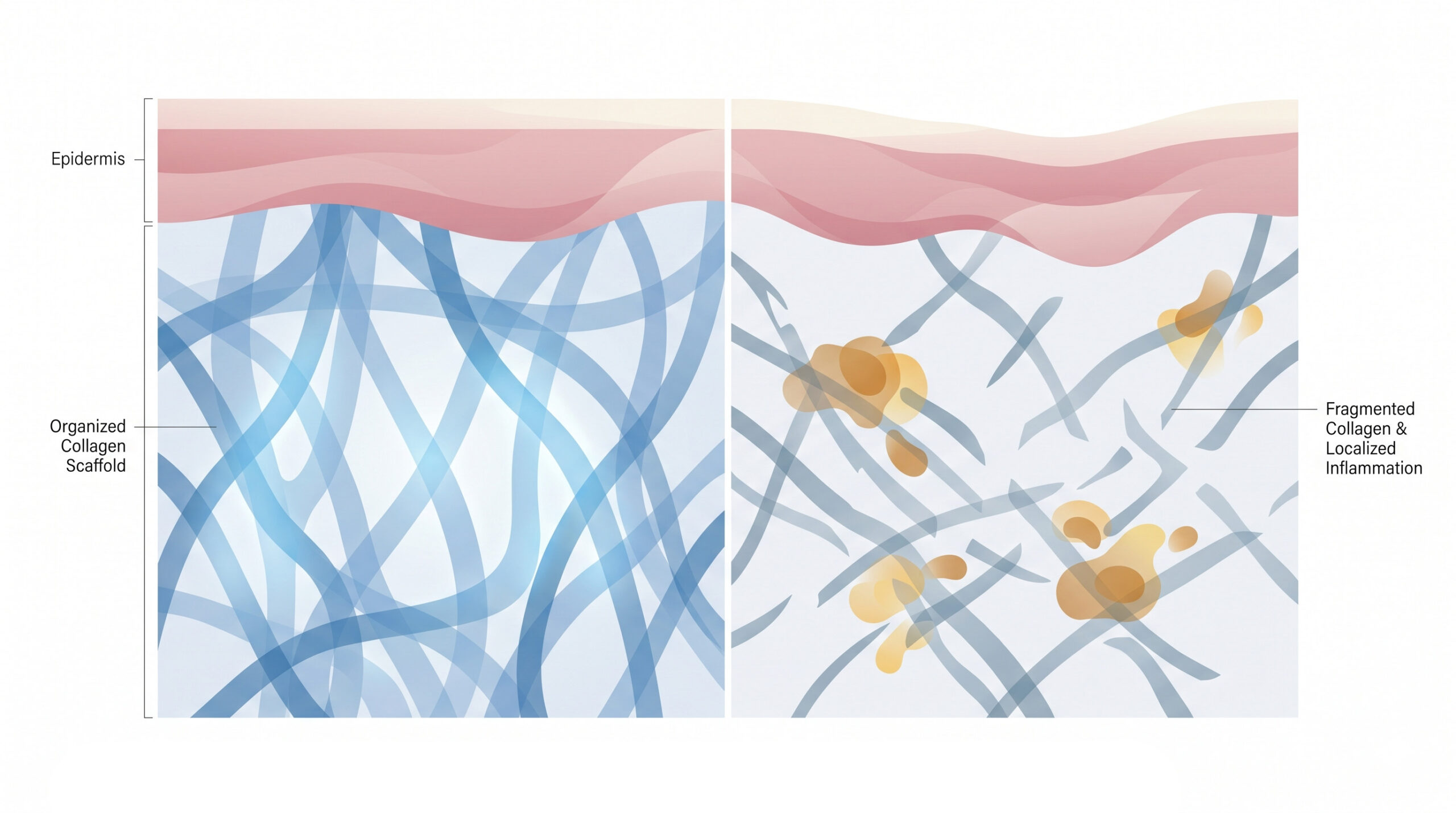
Inflammaging describes a chronic, low-level inflammatory state that develops gradually over time. Unlike acute inflammation, which is part of normal healing and immune defense, inflammaging is subtle and often goes unnoticed for years.
This persistent inflammatory activity influences how skin cells function, repair themselves and communicate with each other. The skin’s collagen-producing cells become slower and less efficient over time, while the supporting structure of the skin gradually loses stability.
The result is not only visible aging, but also reduced skin resilience, accelerated collagen loss and slower regenerative capacity.
Importantly, inflammaging is not caused by one single factor. It reflects the cumulative effect of environmental stress, lifestyle, hormonal changes and metabolic processes acting on the body and the skin over many years.
How Inflammaging Accelerates Collagen Loss and Skin Aging
Collagen is not static tissue. Healthy skin continuously repairs and remodels its collagen network through highly regulated biological processes. Chronic inflammation interferes with these mechanisms on several levels.
Chronic inflammation activates biological processes that gradually break down collagen and weaken the skin’s supporting structure. At the same time, the cells responsible for collagen production become less active and less efficient. Oxidative stress further damages cellular structures and slows the skin’s natural repair pathways.
Over time, the skin loses structural integrity. Patients may notice reduced elasticity, thinning skin, fine lines, dullness, slower healing and increased skin fragility.
In many individuals, these biological changes begin long before advanced wrinkles become visible. Inflammatory processes can silently contribute to early collagen loss for years before patients recognize visible skin aging.
What Triggers Inflammaging?
One of the most important aspects of inflammaging is that many contributing factors are part of everyday life and are often underestimated.
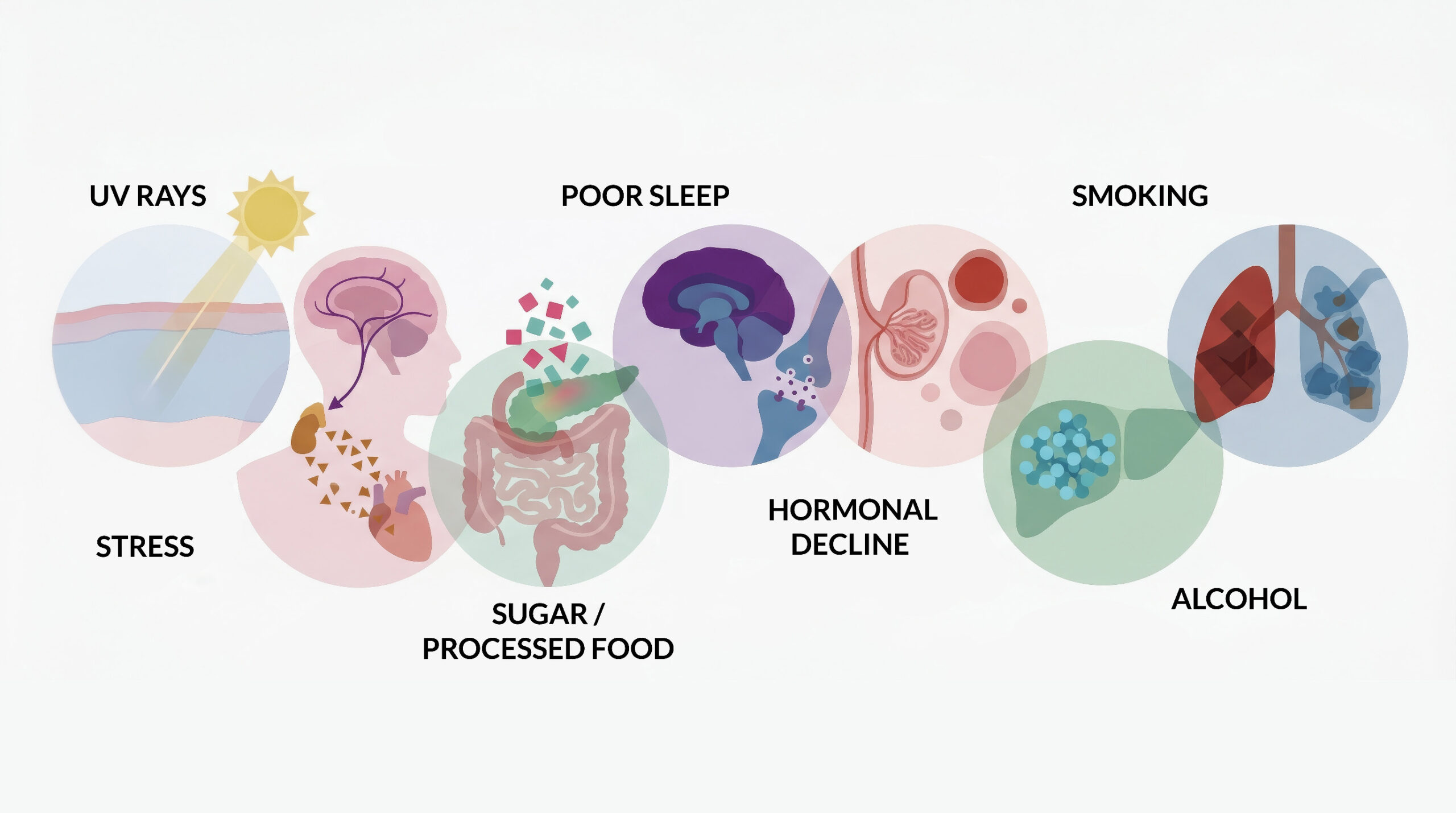
Ultraviolet radiation remains one of the strongest drivers of chronic skin inflammation. Repeated UV exposure activates inflammatory pathways, increases oxidative stress and accelerates collagen degradation, even before visible sun damage appears.
Sleep deprivation also plays a major role. During deep sleep phases, the skin activates repair mechanisms, antioxidant pathways and regenerative signaling. Chronic sleep disruption impairs these processes and contributes to accelerated biological skin aging.
Psychological stress is another key factor. Elevated cortisol levels influence inflammatory activity, vascular regulation and collagen metabolism. In clinical practice, stress-related skin changes are often more significant than patients realize.
Nutrition and metabolic health also directly affect inflammatory signaling. Frequent blood sugar spikes, highly processed foods and metabolic dysregulation can promote chronic inflammatory activity and oxidative stress. Excess visceral fat tissue itself functions as an inflammatory organ by producing pro-inflammatory mediators.
Alcohol consumption, smoking and environmental pollution further amplify oxidative stress and inflammatory burden within the skin.
Hormonal changes, particularly during perimenopause and menopause, add another important dimension. Declining estrogen levels influence collagen metabolism, vascular stability, hydration and inflammatory regulation, making the skin biologically more vulnerable over time.
Hidden Sources of Chronic Inflammation
One of the reasons inflammaging is so complex is that inflammatory processes are not always obvious. Many patients are unaware that hidden inflammatory triggers may exist within the body for years.
Chronic periodontal disease, insulin resistance, obesity, chronic stress and sleep disorders can all contribute to low-grade inflammatory activity and may influence how the skin ages biologically.
This does not mean that every patient requires extensive testing. However, it reflects an important shift in modern dermatology: skin aging is increasingly understood as a reflection of overall biological health rather than an isolated cosmetic issue.
Can Inflammaging Be Measured?
There is currently no single laboratory marker that defines inflammaging precisely. However, certain medical parameters can provide insight into chronic inflammatory and metabolic stress.
In selected patients, markers such as high-sensitivity CRP, glucose metabolism, insulin resistance, vitamin D status or hormonal evaluation may contribute to a broader understanding of biological aging processes.
These findings must always be interpreted within a medical context. Dermatology is not replacing internal medicine or longevity medicine, but increasingly interacts with these fields when evaluating long-term skin health.
How to Reduce Inflammaging and Protect Collagen
The encouraging aspect of inflammaging is that many contributing factors are modifiable. While biological aging cannot be stopped, its trajectory can often be influenced positively through preventive and regenerative strategies.
Daily photoprotection remains one of the most effective interventions in dermatology. Reducing cumulative UV exposure helps stabilize collagen integrity and minimizes chronic inflammatory signaling within the skin.
Sleep quality, stress management, physical activity and balanced nutrition also play important roles in maintaining healthier biological aging processes. These measures support systemic health and indirectly influence skin resilience and repair capacity.
Modern skincare can further support these mechanisms. Antioxidants help reduce oxidative stress, retinoids stimulate cellular renewal and barrier-supportive formulations improve skin stability over time.
Modern regenerative dermatology increasingly focuses on strategies that support healthier biological skin aging and long-term collagen preservation.
→ Learn more about treatment approaches
In recent years, regenerative dermatology has increasingly focused on therapies that aim not only to improve visible signs of aging, but also to support biological repair pathways.
Fractional laser treatments can stimulate collagen remodeling and activate regenerative signaling within the dermis. Picosecond laser treatments allow controlled stimulation with minimal thermal damage and are increasingly integrated into preventive skin longevity concepts.
Regenerative injectables such as polynucleotides and collagen-stimulating biostimulators are also used to support fibroblast activity, extracellular matrix quality and long-term skin resilience.
Importantly, these treatments are not intended to “reverse aging.” Their goal is to support healthier tissue function and improve structural skin quality over time.
GLP-1 Therapy, Weight Loss and Skin Aging
An increasingly relevant topic in modern medicine is the influence of metabolic health and GLP-1-based therapies on biological aging processes.
Weight reduction and improved metabolic regulation may reduce systemic inflammatory burden in many patients. From a longevity perspective, this is highly relevant.
At the same time, rapid weight loss can also make collagen loss, skin laxity and age-related tissue changes more visible. For this reason, dermatological support often becomes an important part of modern metabolic and longevity-oriented medicine.
Preventing and treating structural skin aging increasingly requires a combination of lifestyle optimization, regenerative treatments and individualized skin-focused strategies.
What We See in Clinical Practice
At mySkin Mallorca, we frequently see patients who feel that their skin quality has changed despite maintaining good skincare routines. Many are surprised to learn that biological skin aging is influenced not only by topical products, but also by systemic inflammatory and regenerative processes.
In modern regenerative dermatology, understanding inflammaging has become increasingly important when developing individualized prevention and treatment strategies.
In clinical practice, successful long-term skin aging strategies are rarely based on a single treatment. They require an individualized approach that considers skin biology, lifestyle factors, hormonal influences, photoprotection and regenerative support together.
This is one of the reasons why modern dermatology increasingly overlaps with preventive medicine and skin longevity concepts.
A More Modern View of Skin Aging
For many years, skin aging was viewed primarily as a cosmetic issue. Today, we understand that the process is far more complex.
Inflammaging reminds us that the skin reflects cumulative biological stress over time. The goal of modern dermatology is therefore not simply to “fight aging,” but to support healthier biological aging processes through evidence-based prevention, regenerative medicine and individualized dermatological care.
When skin aging is approached from this broader biological perspective, the focus shifts from short-term correction toward long-term skin health, resilience and function — and that represents one of the most important developments in modern skin longevity medicine.
If you are noticing early collagen loss, changes in skin quality or accelerated skin aging, a structured dermatological assessment can help identify the most appropriate regenerative and preventive strategies for your skin.