Why skin never ages overnight –
and what really accelerates visible change
In my consultation room I often hear the same sentence: “My skin has suddenly aged.” “These spots appeared almost overnight.” And I understand that feeling. Sometimes the change does seem abrupt. The skin looks duller, less elastic, more uneven. Fine lines feel deeper. The glow is gone.
But medically speaking, skin aging is never sudden. What feels abrupt is usually the visible tipping point of cumulative biological stress.
For many years the skin compensates. It repairs ultraviolet damage. It balances inflammation. It stabilizes pigment production. It rebuilds collagen. It maintains its barrier. It is remarkably resilient. But it keeps a record.
The skin remembers everything.
The skin as a mirror of internal health
The skin is the largest organ of the human body and our interface with the outside world. At the same time, it reflects what is happening internally. Texture, tone, elasticity and clarity are not purely cosmetic features. They are biological indicators.
When the body is under strain — through chronic stress, inflammation, hormonal imbalance, poor nutrition or lack of sleep — the skin often shows it first. Not dramatically at first. But gradually. Healing slows. Pigmentation becomes more irregular. Sensitivity increases. The surface appears less even.
Skin health and overall health are inseparable.
Ultraviolet radiation:
the most powerful driver of premature skin aging
If we want to understand premature skin aging, we must talk about ultraviolet radiation.
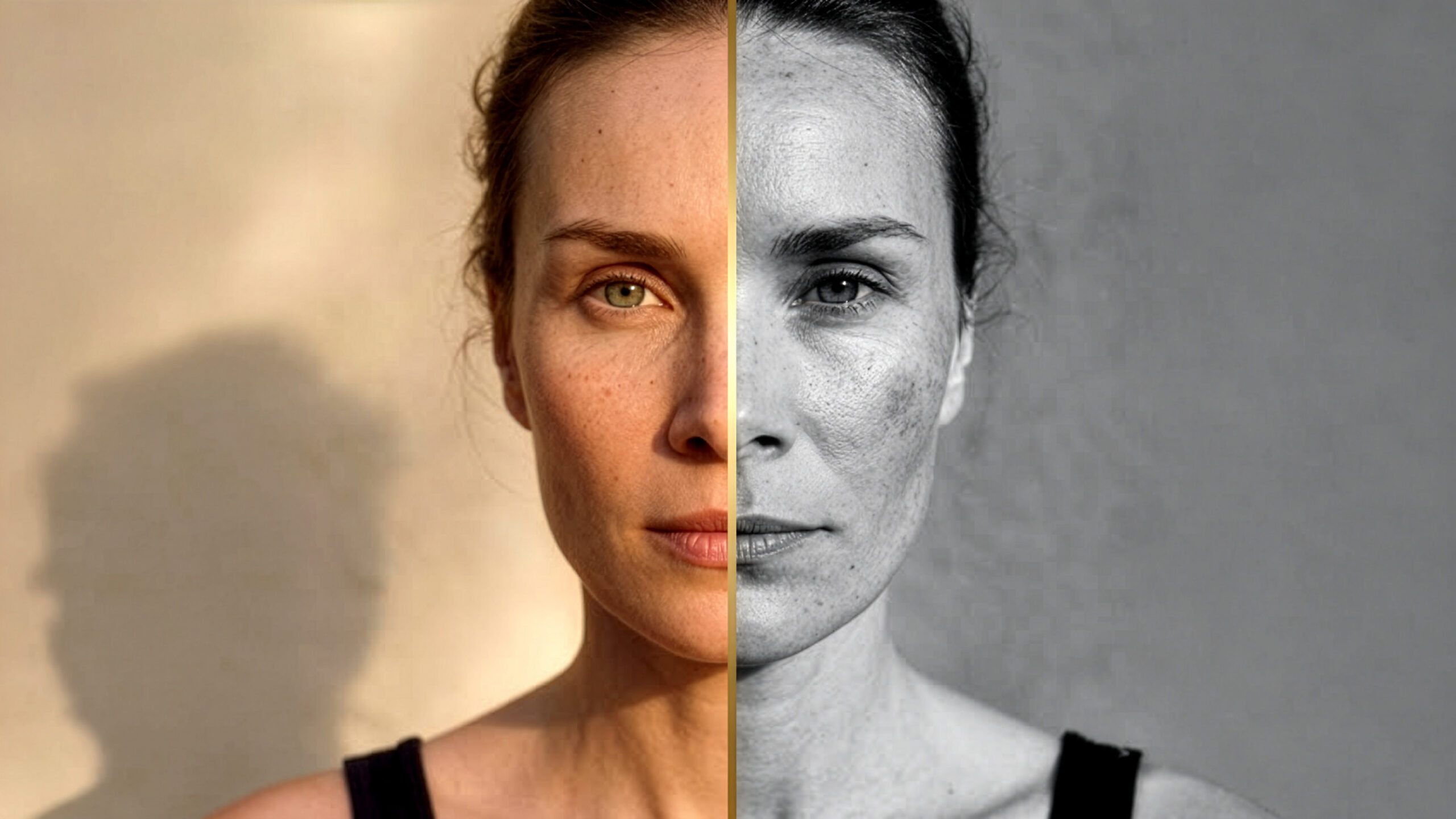
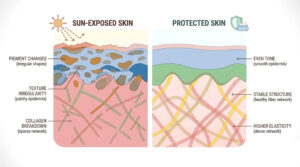
When I perform full-body skin cancer screenings, something becomes very clear. Within the same person, there can be a visible age difference of 15 or even 20 years between different areas of the body. The face, neck, décolleté and forearms — areas exposed to sun for decades — often show fine lines, pigment spots, rough texture and visible vessels. Then you look at the abdomen or buttocks, which have had minimal UV exposure, and the skin there is frequently smoother, firmer and more even.
I sometimes tell my patients, with a smile, “If you want to see what the sun has done to your skin, compare your face to your buttocks.”
It may sound humorous, but it is biologically accurate. UV radiation damages DNA, accelerates collagen breakdown, stimulates melanocytes, alters vascular structures and weakens immune surveillance. Photoaging is not just about wrinkles. It is about structural and surface change. And it is cumulative.
Daily photoprotection remains the most powerful strategy we have. An evidence-based approach such as the ABC+ of skin cancer prevention is not about fear — it is about consistency.
Hormones:
the underestimated structural regulators
Hormonal balance plays a far greater role in skin aging than many people realize.
Estrogen supports collagen stability, dermal thickness, hydration and barrier resilience. When estrogen levels decline, particularly during perimenopause and menopause, the skin can change relatively quickly. It may become thinner, drier and less elastic. Fine lines become more visible and wound healing slows. Many women describe this as sudden aging, but biologically it reflects a shift in structural support.
Hormonal influence is not limited to menopause. Androgens regulate sebaceous activity and influence acne. Thyroid hormones affect hydration, texture and hair density. Chronic stress increases cortisol, which disrupts immune balance and promotes inflammation.
In clinical practice we also observe that when hormonal imbalances are medically optimized — whether through carefully supervised hormone replacement therapy or properly adjusted thyroid medication — skin stability, hydration and resilience often improve. The skin is highly sensitive to endocrine balance. When hormones are out of range, the skin frequently shows it. When they are well regulated, the skin benefits. In some cases, supportive regenerative strategies such as regenerative aesthetic treatments can complement systemic balance by stimulating collagen support and structural stability.
Nutrition and inflammation:
feeding the skin from within

Lifestyle is not an abstract concept. It is biological input.
A balanced diet rich in fiber, vegetables, fruits, healthy fats and adequate protein supports stable blood sugar levels, reduces systemic inflammation and supports collagen metabolism.
High sugar intake and highly processed foods promote glycation, which stiffens collagen fibers, and increase inflammatory signaling. Patients with acne often notice immediately how sugar and fast food aggravate breakouts.
Acne is an inflammatory dermatosis, and metabolic stress fuels inflammation.
But this relationship extends beyond acne. Rosacea, dermatitis and general skin reactivity can worsen when inflammation and metabolic imbalance are present. Even without obvious deficiency, long-term subtle imbalance becomes visible over time.
Healthy nutrition is not about restriction. It is about stability. The skin thrives when inflammation is low and glucose levels are steady.
Smoking and oxygenation
Smoking remains one of the strongest accelerators of premature skin aging.
Nicotine constricts blood vessels and reduces oxygen delivery to the skin. Oxygen is essential for collagen production, wound healing and cellular repair. Chronic reduction in oxygenation leads to dullness, deeper lines around the mouth and slower regeneration.
Even without dramatic wrinkles, smoking skin often appears less vibrant and prematurely aged. The mechanism is simple: skin is living tissue and requires adequate oxygen supply to maintain structure.
Stress, sleep and regenerative capacity
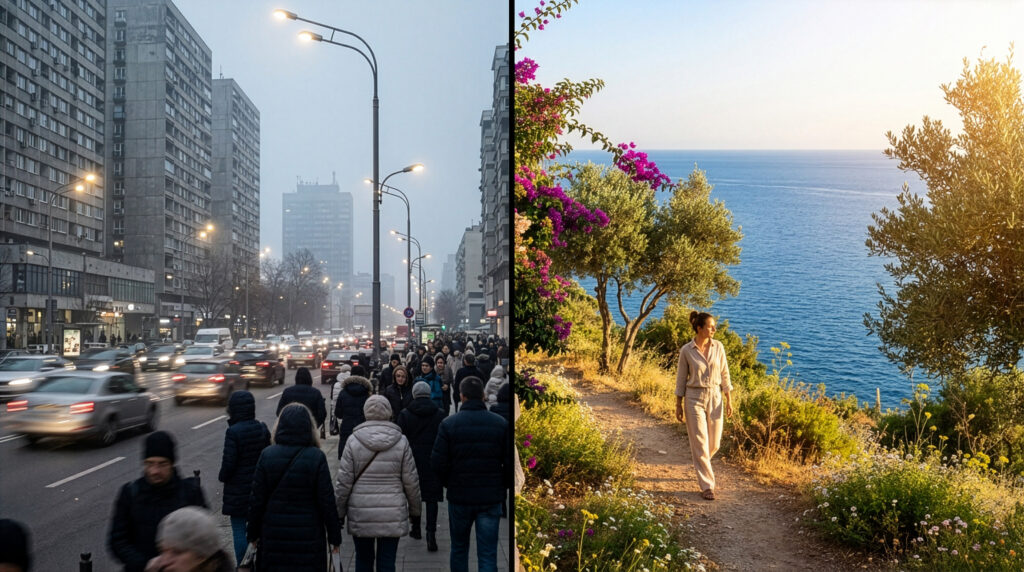
The skin and nervous system are closely connected. Chronic stress increases inflammatory mediators and disrupts barrier stability. Many patients experience acne flares, worsening rosacea or eczema exacerbations during stressful periods.
Sleep is equally important. During deep sleep, DNA repair, barrier restoration and collagen remodeling occur. Chronic sleep deprivation reduces this regenerative capacity. Over time, the skin appears less resilient and slower to recover.
Lifestyle pressure does not remain invisible. It becomes biologically embedded.
Skincare as daily structural maintenance
Skincare cannot compensate for chronic systemic imbalance, but it supports resilience.
Caring for the skin is not seasonal. It is a daily discipline — similar to brushing your teeth. Gentle cleansing, appropriate hydration and consistent LINK sun protection maintain barrier integrity and reduce inflammatory stress.
Proper hydration is not only about drinking water, but about maintaining an intact epidermal barrier. When the barrier is stable, the skin tolerates environmental stress more effectively. When it is repeatedly disrupted, inflammation escalates more easily.
Aging is cumulative — but not inevitable
Genetics influence skin quality. We are born with a certain collagen structure, a specific skin type and a particular level of sensitivity or pigmentation. Fair skin reacts differently to UV exposure than darker skin. Some individuals are more prone to inflammation or pigmentation changes than others.
But genetics are the foundation — not the final outcome.
What determines how prematurely skin ages is how genetic predisposition interacts with lifestyle. Chronic UV exposure accelerates collagen loss. Persistent inflammation weakens barrier integrity. Hormonal imbalance alters structural stability. Metabolic instability promotes glycation.
These processes are biological — but they are modifiable.
Even individuals with sensitive or fair skin can significantly influence their skin aging trajectory through consistent habits. Daily sun protection, balanced nutrition, stress regulation, restorative sleep, smoking cessation, appropriate hormonal care and thoughtful skincare all support skin longevity.
Premature skin aging is rarely caused by one dramatic event. It is the cumulative effect of small, repeated influences. And accumulation works in both directions. Just as long-term stress accelerates visible aging, long-term healthy habits strengthen resilience.
You cannot change your genetics.
But you can influence how strongly they are expressed.
Skin longevity is not about perfection.
It is about reducing avoidable acceleration and supporting the skin’s natural repair capacity.
Your skin reflects how you live — and fortunately, it responds when you change.