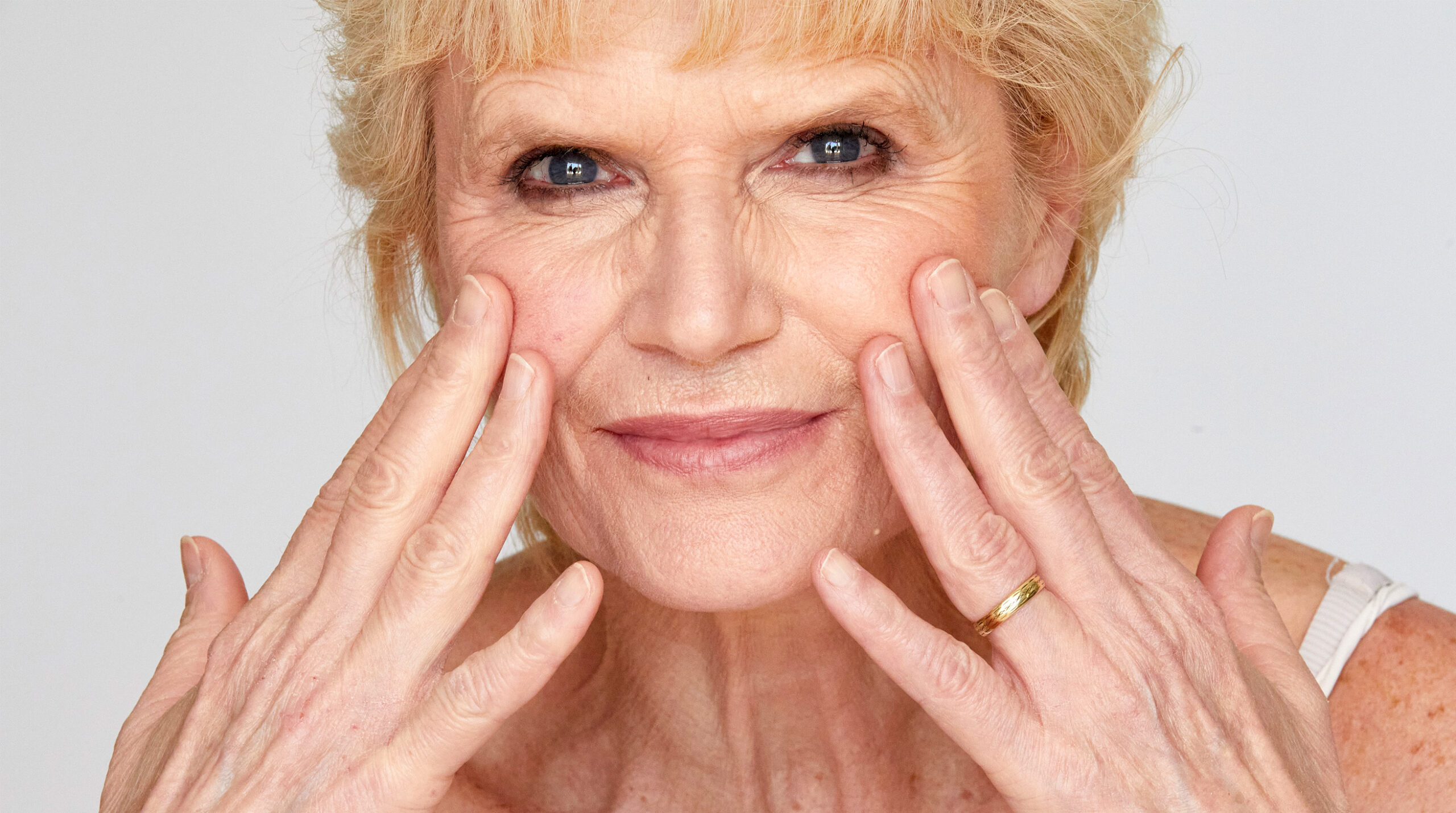
Many patients in their 40s come to our clinic saying almost the same thing:
“I suddenly look tired.”
“My face has changed so quickly.”
“I still take care of my skin — but somehow I look older overnight.”
For many women, these changes begin during perimenopause, the hormonal transition phase during which many women first notice significant skin changes. But men often notice similar changes as well: the skin looks less firm, less fresh and somehow more tired than before. What surprises many patients is that these changes rarely happen suddenly. In most cases, the biological processes behind them have been developing quietly for years. Your 40s are often the decade in which deeper structural skin aging and collagen loss after 40 start becoming much more visible.
Why the 40s Often Feel Like a Turning Point

In your 20s and early 30s, the skin is usually still able to compensate for many damaging influences. Collagen production is more active, cellular repair mechanisms work efficiently and the skin recovers faster from stress, sun exposure and inflammation. Over time, however, these repair systems gradually slow down.
By the 40s, several biological changes often begin to overlap:
- collagen production decreases
- fibroblasts become less active
- elastin fibers weaken
- cumulative UV damage becomes more visible
- regenerative capacity slows down
- hormonal changes affect skin quality
The result is not simply “older skin,” but a real structural change within the deeper layers of the skin.
Patients often notice:
- reduced firmness
- early skin laxity
- thinner skin
- dullness and reduced glow
- pigmentation and sun damage
- a more tired appearance around the eyes and lower face
The Hormonal Changes Behind Skin Aging
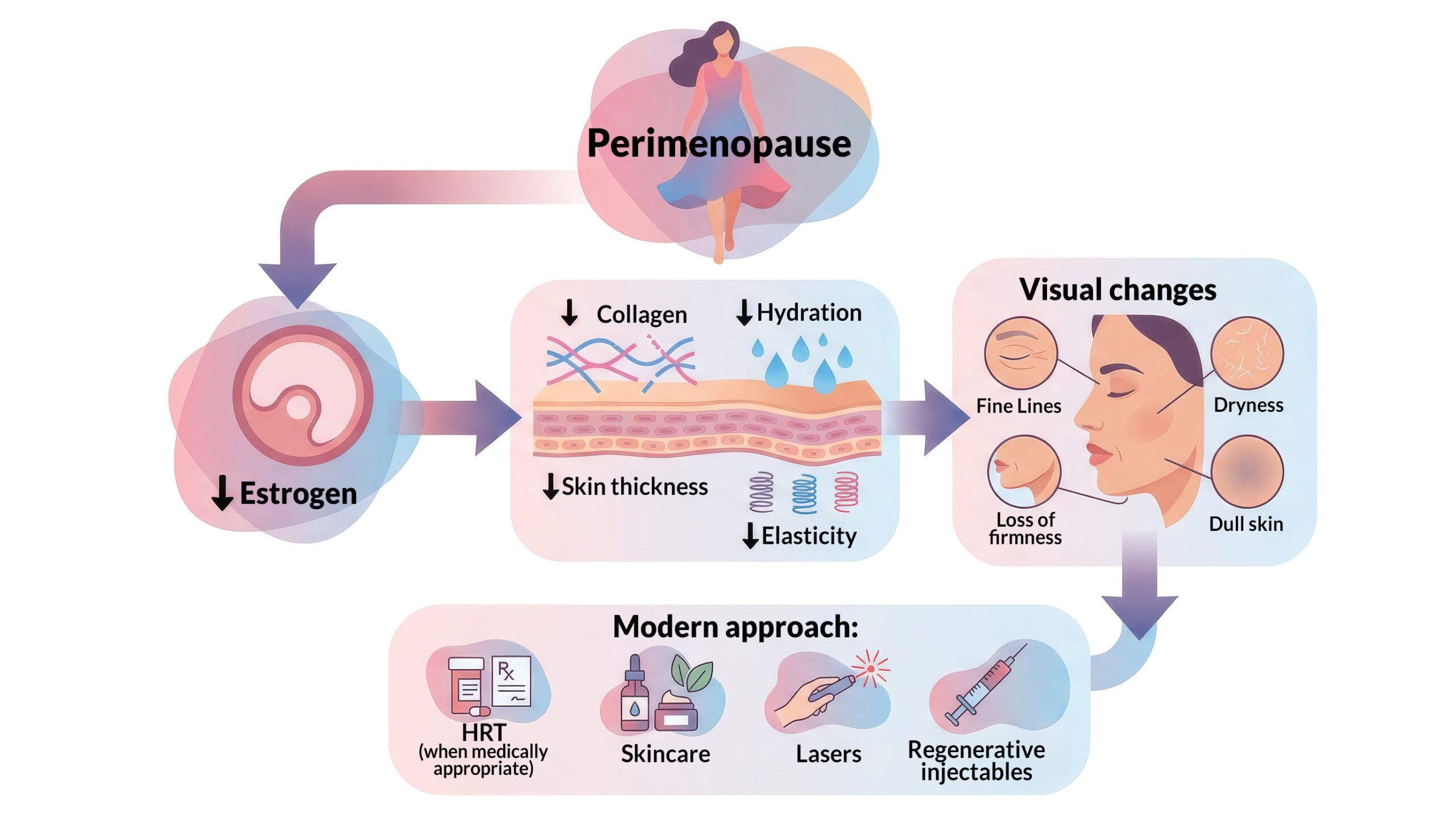
One of the biggest reasons skin changes accelerate during the 40s — especially in women — is the hormonal transition phase known as perimenopause. During this time, estrogen levels gradually begin to decline, often years before menopause itself. Estrogen plays an important role in collagen stability, hydration, skin thickness, vascular function and wound healing. As hormone levels change, the skin becomes biologically more vulnerable.
Many women notice:
- increasing dryness
- more sensitive skin
- reduced elasticity
- loss of skin density
- slower recovery
- changes in facial contours
Hormonal decline also affects much more than the skin. Modern medicine increasingly recognizes that estrogen influences multiple organs and biological systems throughout the body. Patients are often surprised to learn that hormone replacement therapy (HRT) is not only about treating hot flashes. In appropriately selected women, early and individualized hormonal support may also positively influence:
- bone density and osteoporosis prevention
- cardiovascular health
- sleep quality and recovery
- mood and emotional stability
- cognitive health
- skin quality and collagen preservation
This does not mean that HRT is appropriate for every patient. Decisions regarding hormone therapy always require an individualized medical assessment. However, many experts now believe that waiting until significant hormonal decline has already occurred may mean missing an important preventive window.
Why Skincare Alone Often Stops Being Enough
Good skincare remains extremely important in your 40s. Daily sunscreen, antioxidants, retinoids and barrier-supportive skincare all help support healthier skin aging. But many patients reach a point where skincare alone no longer creates the same visible changes it once did. This is because deeper structural skin changes cannot be fully addressed on the surface alone. When collagen production slows down and the skin’s support structure weakens, topical products can support the skin — but only partially influence deeper tissue remodeling and structural loss. This is often the moment when patients begin to understand that skin aging is not only about wrinkles, but about gradual structural change.
Understanding “Collagen Banking”
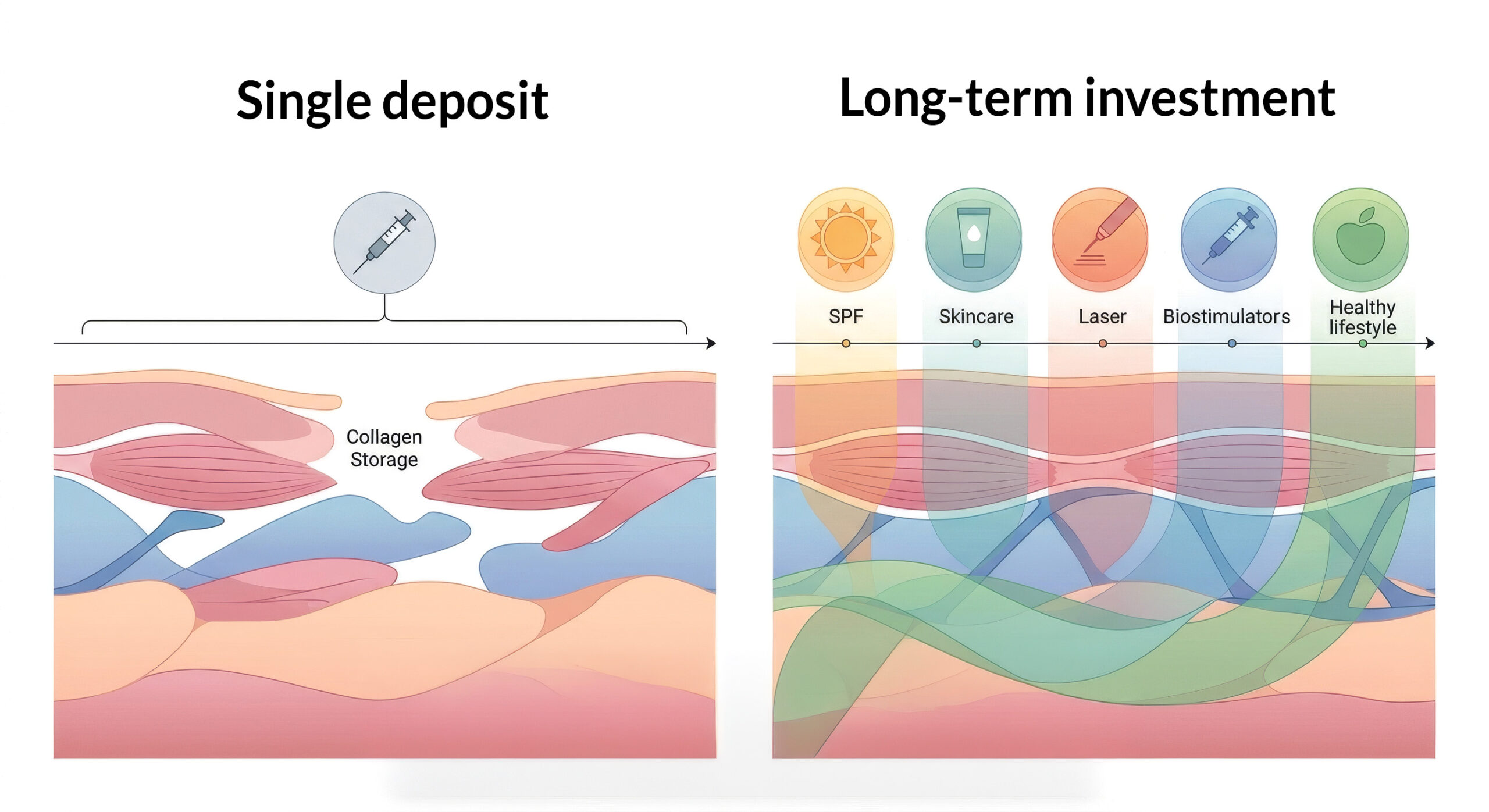
One of the most discussed concepts in modern regenerative dermatology is “collagen banking.” The term can sound slightly misleading, because collagen cannot simply be “stored” like money in a savings account. A better way to understand it is this: collagen maintenance works much more like long-term training and consistent maintenance than a one-time investment.
Most people already accept this concept naturally in other parts of life. We exercise regularly to maintain muscle strength. We continuously care for our teeth, hair and nails to preserve their quality over time. Healthy nutrition is not something we do once — it is a long-term investment in the body’s function and resilience. And honestly, most of us notice at some point that maintenance simply becomes part of life — myself included. Staying fit suddenly requires more consistency. Recovery becomes slower. Muscles need regular training, energy levels depend more on sleep and stress management — and somehow even the hair seems to demand more attention than it did ten years ago. The skin is no different. The goal is therefore not to “store” collagen permanently, but to continuously support the skin’s regenerative activity and stimulate collagen production over time so that structural decline happens more slowly. The encouraging part is that the skin also has a form of biological memory. It remembers cumulative sun damage and chronic inflammation — but it also responds to positive regenerative stimulation over time.
Regular collagen stimulation and regenerative support may help maintain:
- skin firmness
- elasticity
- skin density
- facial contours
- overall skin quality over time
The earlier regenerative support begins, the easier it is biologically to maintain skin quality and structural stability over time.
Modern Regenerative Approaches in Your 40s
Modern regenerative dermatology increasingly focuses on prevention, regeneration and structural support rather than aggressive correction. Fractional laser treatments can stimulate collagen remodeling and improve skin texture. Picosecond laser technologies are increasingly used for preventive collagen induction with minimal downtime.
IPL treatments may help reduce pigmentation and cumulative sun damage that become more visible during this decade. Regenerative injectables such as polynucleotides, skinboosters, hyaluronic acid fillers and collagen-stimulating biostimulators may support hydration, restore age-related volume loss, improve facial support and maintain long-term structural stability.
Importantly, the goal of modern regenerative dermatology is not to create an artificial appearance or dramatic overcorrection. Most patients today simply want to look healthy, fresh and natural while maintaining skin quality as long as possible.
Why Combination Treatments Often Work Best
Skin aging is multifactorial. Collagen loss, pigmentation, hormonal changes, inflammation and barrier dysfunction all interact with each other. For this reason, isolated treatments often only address one part of the process. Modern dermatology increasingly relies on combination-based regenerative strategies that integrate:
- skincare
- photoprotection
- collagen stimulation
- regenerative injectables, including hyaluronic acid fillers
- laser-based skin renewal
- lifestyle optimization
- hormonal evaluation when appropriate
This more comprehensive approach reflects how preventive and regenerative dermatology increasingly understands healthy skin aging.
What We See in Clinical Practice
At mySkin Mallorca, many patients in their 40s tell us they still feel young and energetic — but their skin suddenly no longer reflects how they feel internally. Often, this is not caused by one single wrinkle or isolated problem. It is the cumulative effect of structural skin changes that gradually become visible during this decade. What frequently creates the best long-term improvement is not one aggressive intervention, but a structured strategy focused on regeneration, prevention and long-term collagen support. Patients increasingly seek natural-looking results, healthier skin quality and subtle structural improvement rather than dramatic correction — and modern regenerative dermatology is moving strongly in this direction.
A Smarter Approach to Skin Aging
Your 40s are not simply about looking older. They are often the decade in which the biological foundations of skin aging become visible. Understanding these changes early creates an important opportunity: not to “fight aging,” but to support healthier biological aging processes before advanced structural decline develops. When regenerative and preventive strategies are started early and maintained consistently, patients are often able to preserve healthier, stronger and more radiant skin for many years to come.