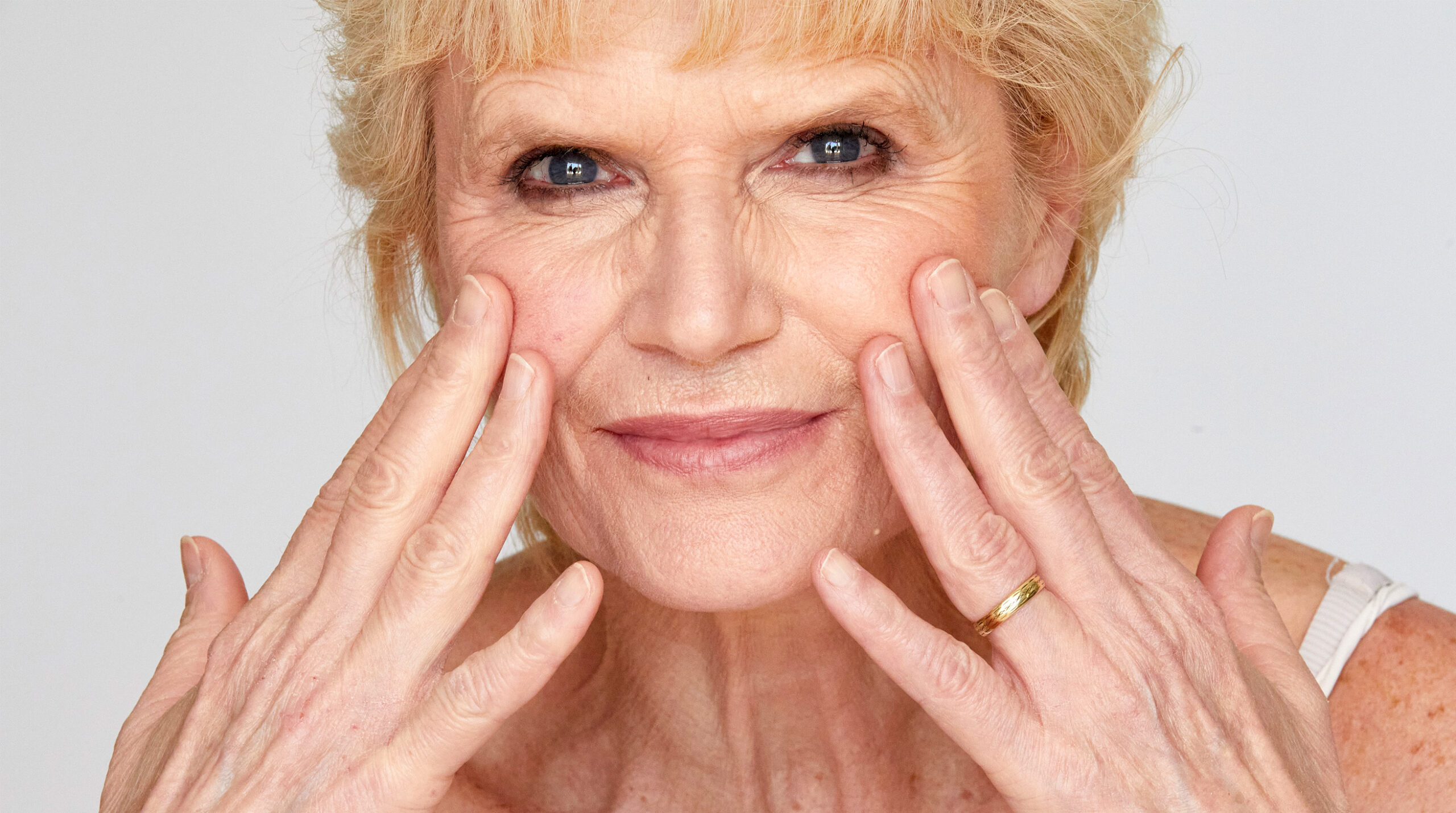
Many patients in their mid-30s come to us with a similar question. They are using high-quality skincare, they are consistent, they invest time and money — and yet their skin is slowly changing. The glow is not the same. The skin feels drier. Fine lines appear. Pigmentation becomes more visible.
And the question arises: Why is this happening, even though I am doing everything right?
The answer is not that skincare is ineffective. The answer is that skin aging after 35 is driven by deeper biological changes within the skin.
What happens to the skin after 35
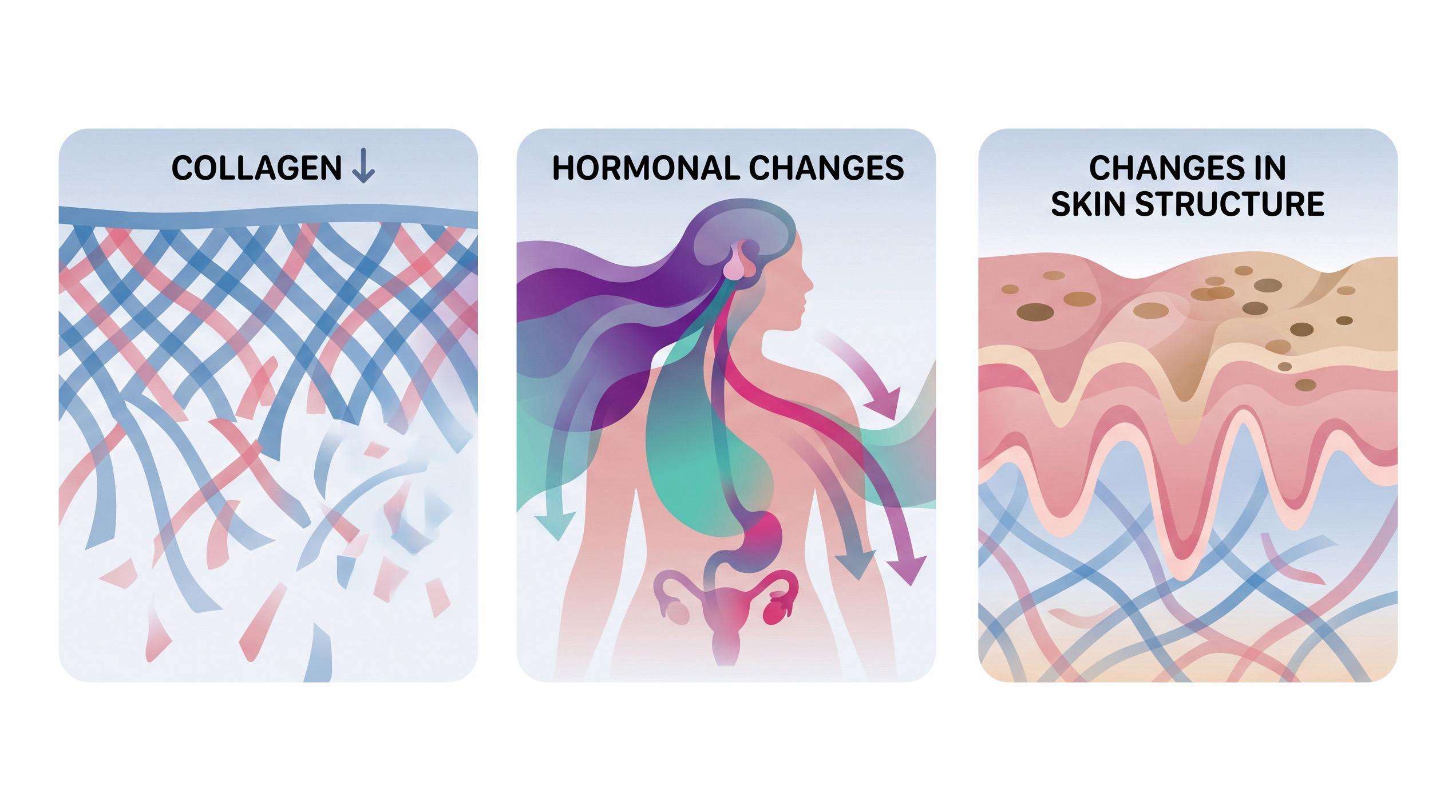
Skin aging is a gradual biological process that begins long before it becomes visible. From the mid-30s onward, collagen production declines by approximately one percent per year, while collagen breakdown increases. This imbalance affects the structural integrity of the skin over time. Fibroblast activity decreases, the extracellular matrix becomes less stable, and the skin gradually loses elasticity and firmness. These changes take place in the deeper layers of aging skin — not on the surface.
This is why you may notice that your skin feels different — even before you can clearly define why.
Hormonal changes: the silent driver of skin aging.
In addition to structural aging, hormonal changes play a central role. From the mid-30s onward, hormonal balance begins to shift subtly. Estrogen levels fluctuate and gradually decline, influencing collagen synthesis, skin thickness, hydration and vascular stability. In clinical practice at our dermatology clinic at mySkin Mallorca, we frequently see that these hormonal changes manifest as dryness, increased sensitivity and a reduced ability of the skin to regenerate. You may notice that your skin becomes more reactive, less resilient or simply harder to “manage” than before.
These changes are often underestimated — but they are highly relevant for long-term skin health.
Why skincare still matters — but has limits
Modern skincare is highly effective and remains an essential foundation. Ingredients such as antioxidants, retinoids and hydrating compounds can significantly improve skin quality. Vitamin C helps neutralize free radicals, retinoids stimulate cell turnover and support collagen metabolism, and hydrating ingredients help maintain barrier function. These are important foundations of healthy skin. But skincare primarily works in the upper layers of the skin. It can support and protect — but it cannot fully compensate for structural changes in the deeper dermis.
This is the point many patients are not told: You cannot reverse collagen loss or long-term skin aging with skincare alone.
What we observe in daily dermatological practice
In daily dermatological practice at mySkin Mallorca, we see many patients after 35 who have followed excellent skincare routines for years — and still feel that their skin is slowly losing quality. You might recognize this situation: you are doing everything right, and yet the results are no longer the same. This is not a failure of skincare. It is a reflection of biological skin aging.
Over time, visible changes appear: pigmentation, redness, vascular changes, early volume loss, fine lines and textural irregularities. At this stage, skincare alone is usually no longer sufficient to meaningfully influence these developments.
When skincare is no longer enough
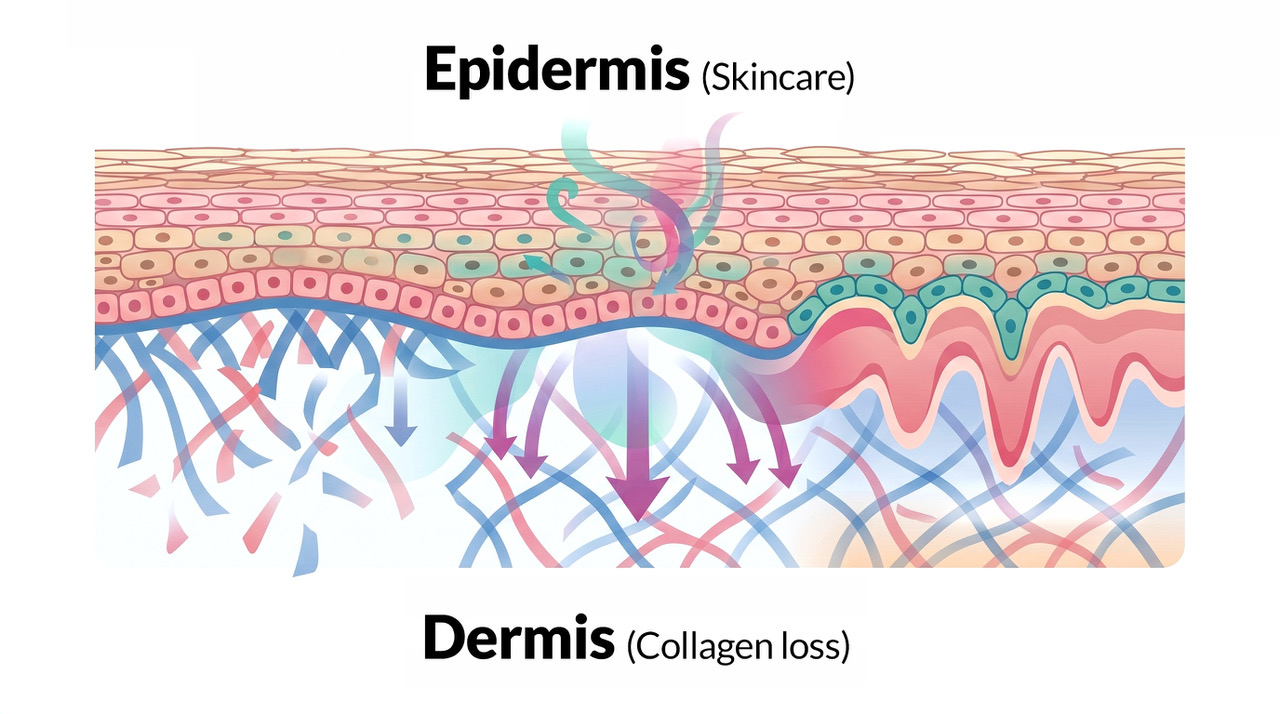
There is a point where structural changes require targeted dermatological treatments. Pigmentation often cannot be corrected with topical products alone. Vascular changes do not respond to skincare. Loss of elasticity and collagen cannot be restored from the surface. This is where modern dermatology offers more advanced options. Depending on the individual skin condition, this may include collagen-stimulating treatments that activate fibroblast activity, regenerative approaches that support the extracellular matrix, or energy-based technologies designed to trigger controlled collagen remodeling in deeper skin layers.
In clinical practice, we often combine these approaches in a structured way to stabilize skin quality over time. The key is not a single treatment — but a personalized dermatological strategy based on how your skin is aging.
Why individualized treatment strategies matter
Every skin ages differently. Genetics, lifestyle, sun exposure and hormonal changes all influence how and when visible aging occurs. This is why standardized treatments often lead to inconsistent results. A meaningful approach requires understanding the biology of the skin, identifying the dominant aging mechanisms, and selecting treatments accordingly.
This is where dermatological expertise becomes essential — especially when you want to move beyond trial and error.
Sun protection: the most underestimated anti-aging strategy
If there is one constant in skin aging, it is the impact of ultraviolet radiation. UV exposure accelerates collagen degradation, promotes pigmentation and contributes to chronic inflammation. What many patients underestimate is how little exposure is required to activate these processes. Even short, incidental exposure plays a role. Consistent, year-round photoprotection is therefore one of the most effective long-term strategies for maintaining skin quality — especially after 35.
A modern approach to skin aging after 35
Skin aging after 35 cannot be stopped — but it can be guided. A modern dermatological approach combines high-quality skincare, consistent photoprotection, and, when appropriate, targeted medical treatments. The goal is not to change the face or create artificial results. It is to maintain skin quality, stability and natural expression over time.
From frustration to strategy
Perhaps the most important shift after 35 is not the product you use — but the strategy behind it.
When you understand that skincare alone is not enough, everything changes.
Instead of searching for the next product, you begin to understand your skin — and how to support it in a structured and sustainable way. This is often the turning point. And it is exactly at this point where real, visible improvement becomes possible.